

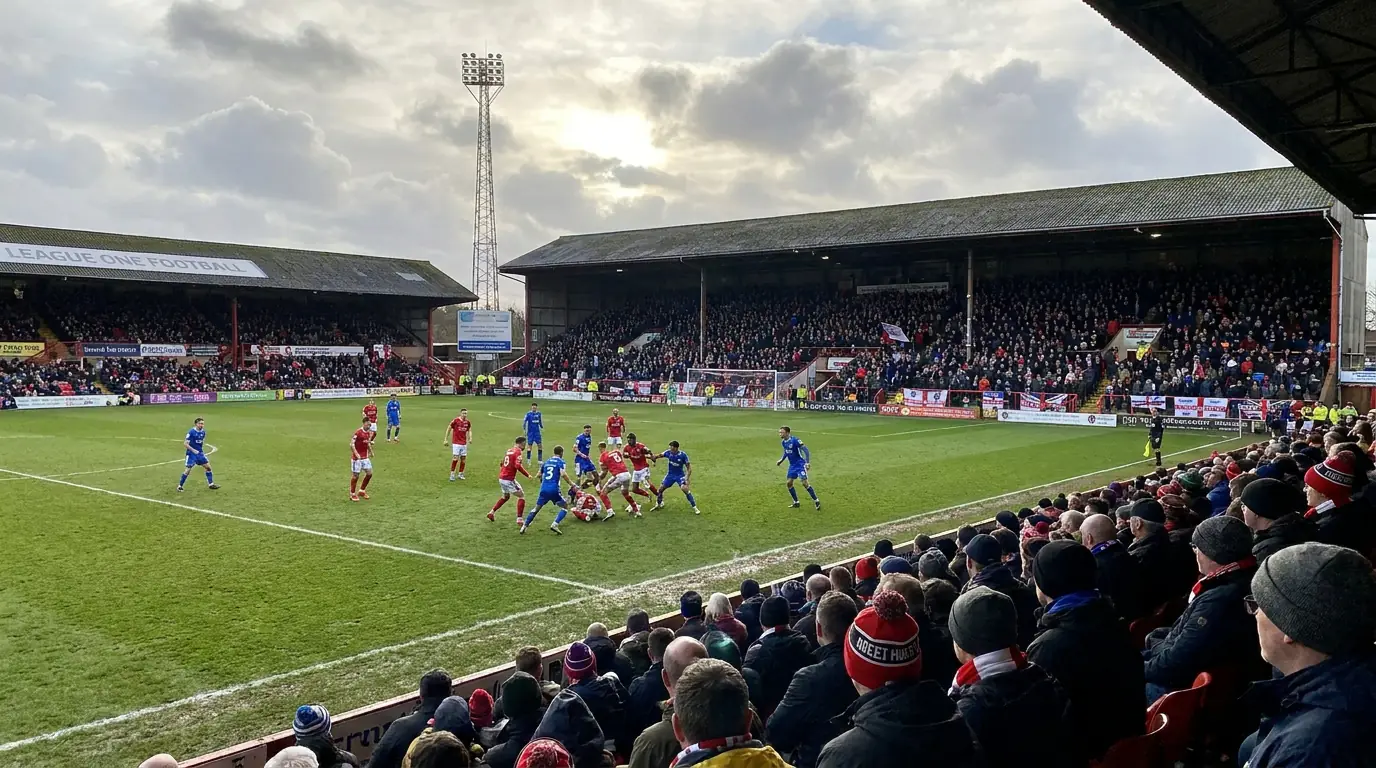
My introduction to League One betting came through frustration. I’d been grinding Premier League markets for years, and the margins were getting thinner every season. A fellow analyst suggested I look at the third tier, and my initial reaction was dismissive — fewer stats, less coverage, smaller markets. Within six months, League One had become the most profitable part of my portfolio. The reason was simple: fewer eyes on the data meant the prices were softer.
League One sits in a peculiar sweet spot within the English football pyramid. It’s high enough to attract decent bookmaker coverage — most major operators offer match result, over/under, and BTTS markets for every fixture — but low enough that the pricing algorithms struggle with the volatility. Draws are significantly more frequent in the lower leagues than in the Premier League, and that single pattern alone has shaped how I approach every matchday in this division.
League One Structure and the Betting Calendar
Twenty-four teams. Forty-six matches each. Two automatic promotion spots, a play-off for the third, and four relegation places into League Two. The sheer volume of fixtures across a season is what makes League One attractive to bettors who prefer frequency over stake size.
Sky Bet’s thirteen-year sponsorship of the EFL means the division carries the “Sky Bet League One” branding, and that commercial relationship has gradually improved the data infrastructure around the third tier. Ten years ago, finding reliable expected-goals data for a League One fixture was nearly impossible. Today, providers like Opta and StatsBomb cover every match, though the depth of their data still lags behind what’s available for the top two divisions.

The betting calendar in League One mirrors the Championship but with a sharper edge. August fixtures are almost a coin toss — promoted and relegated clubs need time to settle, and pre-season form is a notoriously poor predictor at this level. By November, the table starts to stabilise, and that’s when outright markets for promotion and relegation become genuinely interesting. The final ten matches of the season are where I’ve historically made the largest proportion of my League One returns, because desperation — both at the top and bottom of the table — produces predictable tactical shifts that the odds don’t always reflect.
Market Availability and Liquidity
Anyone expecting Premier League-level market depth in League One will be disappointed. The standard offering for a Saturday League One fixture includes match result, double chance, draw no bet, over/under goals (usually 1.5, 2.5, and 3.5 lines), BTTS, correct score, and first goalscorer. Bet builder options have expanded in recent years, but they’re typically limited to the higher-profile matches — televised fixtures and derbies.
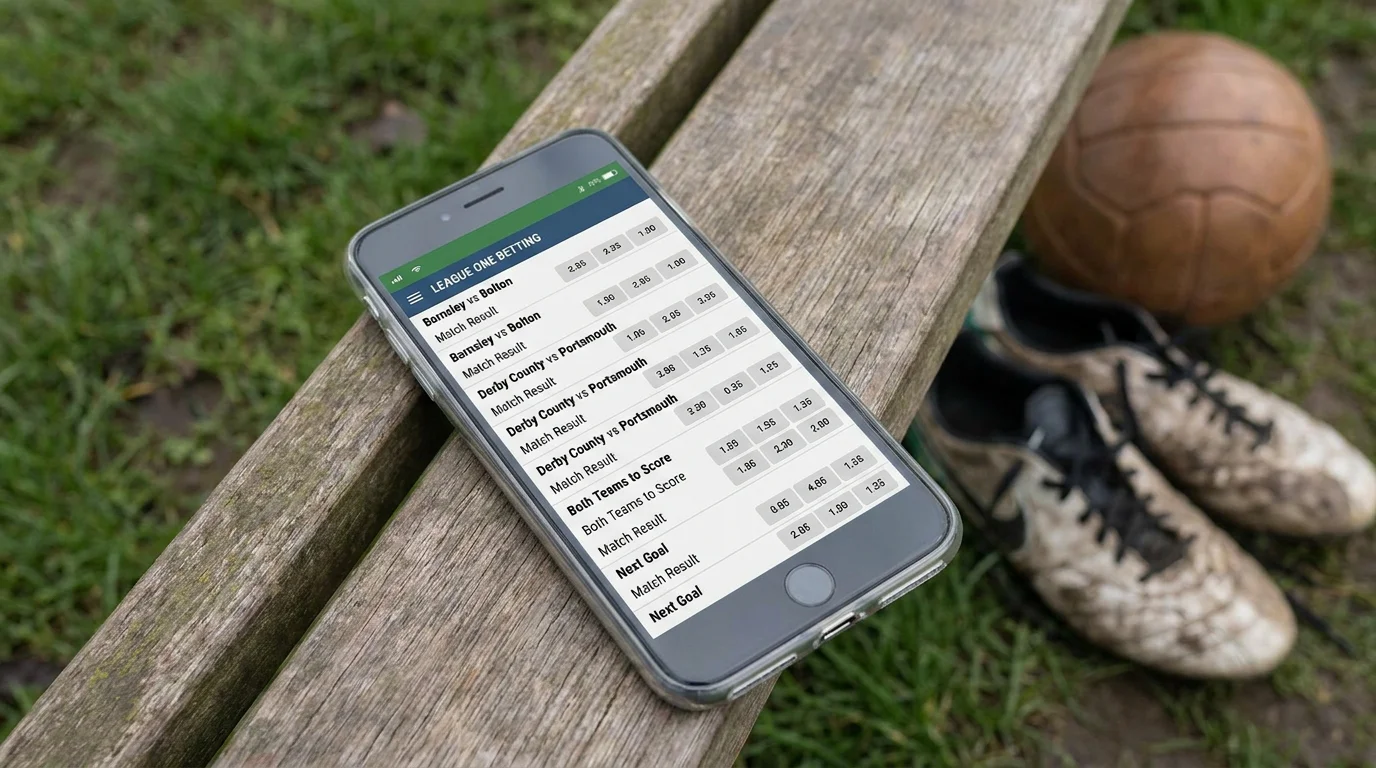
Liquidity is the real constraint. Bookmaker limits on League One bets are substantially lower than on Premier League equivalents, which means large stakers will hit maximum bet restrictions quickly. For the majority of recreational and semi-serious bettors, though, this isn’t a material issue. If you’re placing bets in the £10-£50 range, you’ll rarely encounter problems. The lower liquidity actually works in your favour in one respect: prices can be slower to adjust to team news and late lineup changes, giving attentive bettors a window of opportunity that doesn’t exist at higher levels.
Draw and Goals Patterns That Shape the Market
If there’s one statistical fact I wish someone had told me before I started betting on League One, it’s this: draws happen far more often in the lower EFL divisions than in the Premier League. Over the past five seasons, League One draw rates have consistently hovered between 25% and 28%, compared to roughly 20% in the top flight. That differential is enormous when translated into odds.
Bookmakers price League One draws at roughly the same implied probability as Premier League draws — typically around 3.20 to 3.50 — but the actual frequency justifies shorter odds. This systematic mispricing of the draw is the single most exploitable pattern I’ve found in third-tier betting. I don’t bet the draw blindly, but when my pre-match analysis points towards a tight, low-quality fixture between two mid-table sides, the draw price almost always offers positive expected value.
Goals patterns reinforce this. League One matches produce fewer goals on average than Premier League fixtures, particularly in away fixtures. The under 2.5 goals market on League One away days has been one of the most reliable bets in my entire approach — not glamorous, not exciting, but consistently profitable over a season-long sample. Teams travelling in League One tend to set up defensively, and the quality gap between sides means fewer of the counter-attacking transitions that produce goals in the top flight.
These aren’t abstract patterns. They’re observable every matchday, and they’re the foundation of how I build my weekly League One selections.
Finding Value When the Market Isn’t Watching
Value in League One doesn’t come from predicting shock results. It comes from recognising when the market has priced a match based on reputation rather than current form. A club that was relegated from the Championship last season will carry short odds for the first two months of the League One campaign, regardless of whether their squad has been gutted by departures. Conversely, a promoted League Two side that kept their core together will be underestimated until results force the market to adjust.

My approach centres on three variables: managerial stability, home form over the last ten matches, and the defensive record in the current run of fixtures. League One is a division where coaching quality varies wildly, and a well-organised side with a settled back four can punch well above its weight against technically superior opposition. When I find a team whose underlying defensive numbers are strong but whose results have been undermined by a couple of high-profile defeats, the match result and draw no bet markets often offer odds that don’t reflect the actual balance of the fixture.
For anyone looking to explore other EFL divisions with similar characteristics, League Two betting presents even sharper contrasts — fewer goals, tighter margins, and an even greater premium on specialist knowledge.
The 10% of the UK population that bets on sport online includes a growing segment of League One specialists, and the community around third-tier analysis is expanding rapidly. The edge is narrowing, but for bettors willing to do the work, League One remains one of the most rewarding tiers in English football.
Articles
Prepared by the leaguebettips.com editorial staff.
