
League Betting UK: The Complete Data-Driven Guide to English Football Betting
Data-Driven Insights Across the English Football Pyramid Available in US
Loading...

Introduction
Ten years ago, I placed my first serious football bet — a three-fold on Championship matches that I'd picked based on nothing more than gut feeling and a vague sense that Burnley were "due a win." I lost. The next week, I lost again. It took about six months of bleeding money before I sat down with a spreadsheet, pulled actual data on draw frequencies and goal patterns across divisions, and realised the gap between how most people bet on English football and how the market actually works is enormous.

That gap still exists. Football generates over £1.1 billion in gross gambling yield annually — the single biggest sport for betting in the UK, attracting 5.8% of the adult population. Around 290 million online bets are placed every month on real sporting events across the country. Yet the vast majority of punters approach these markets with the same lack of structure I had back in 2016: picking favourites, chasing accumulators, ignoring the differences between a Premier League Saturday and a League Two Tuesday night.
This guide exists because I got tired of watching the same mistakes repeat. I've spent a decade analysing English football betting markets — from the Premier League down to League Two and occasionally the National League — and the single most consistent finding is that data beats instinct. Not always on a single bet, but over hundreds and thousands of selections, the punter who understands market structure, league-specific patterns, and regulatory context will outperform the one running on emotion.
What follows is everything I've learned about league betting in the UK, grounded in current statistics, regulatory developments, and the kind of practical detail that odds comparison sites never provide. Whether you're placing your first football bet or you've been at this for years without a clear framework, the aim is the same: replace guesswork with evidence.
What Ten Years of English Football Betting Data Actually Shows
- UK sports betting generated $11.2 billion in 2024 and is projected to reach $21.3 billion by 2030 — football drives the largest share, with £1.1 billion in annual GGY alone.
- The Premier League offers the deepest markets and tightest margins, but EFL divisions — where draws are more frequent and Under 2.5 goals more reliable — hold genuine value for specialists willing to do the analytical work.
- Mobile accounts for 71% of all online bets. Choosing a bookmaker should be based on odds quality and EFL market depth, not welcome offers.
- Regulation has tightened significantly: a £100 million statutory levy, affordability checks at £150 net deposits, and front-of-shirt gambling sponsorship ending from 2026/27.
- Profitable betting is systematic — track every bet, use flat staking, compare odds across operators, and treat value identification as a discipline, not a guess.
The UK Betting Landscape: Scale, Money and Who's Actually Punting
I remember explaining to a non-betting friend that the UK gambling industry generated £4.5 billion in gross gambling yield in the final quarter of 2025 alone. His response: "So... that's what punters lost?" Essentially, yes. GGY — gross gambling yield — is the total amount staked minus the total amount paid out in winnings. It's the industry's top-line revenue, and it gives you a sense of the sheer scale of money moving through licensed operators every three months.
£4.5 Billion
Industry GGY in Q4 2025 — a single quarter of UK gambling revenue.
$21.3 Billion
Projected UK sports betting market revenue by 2030, growing at 11.4% CAGR.
47%
Share of UK adults who participated in some form of gambling in the past four weeks.
10%
Share of the UK population betting on sports online.
The projection side of these numbers is equally striking. The UK sports betting market generated $11.2 billion in revenue in 2024 and is forecast to reach $21.3 billion by 2030 — a compound annual growth rate of 11.4%. That's not a mature market gently plateauing. That's an industry still accelerating, driven largely by mobile technology, the expansion of in-play markets, and the proliferation of bet types that simply didn't exist a decade ago.
But raw revenue figures only tell part of the story. Participation data reveals who's actually betting and how. The Gambling Commission's latest survey — Wave 4 of the Gambling Survey for Great Britain, which collected 5,203 individual responses between September 2025 and January 2026 — found that 47% of respondents had participated in some form of gambling in the previous four weeks. Strip out those who only bought a lottery ticket, and you're left with 26% — still more than one in four adults.
For online sports betting specifically, 10% of the UK population is active. That's millions of people placing bets through apps and websites every week. And within sports, football dominates everything. Live football is the most popular betting sport in the country, with 6% of all UK adults placing a bet on it. To put that in context: more people bet on football matches than on horse racing, tennis, cricket, and golf combined in the online space. The gender split is pronounced too — 15% of men bet on sport compared to 4% of women, though that gap has been narrowing gradually over the past five years.
17.4 million UK adults placed an online bet in 2024 — roughly one in every three. The UK accounts for 11.1% of the entire global sports betting market by revenue.
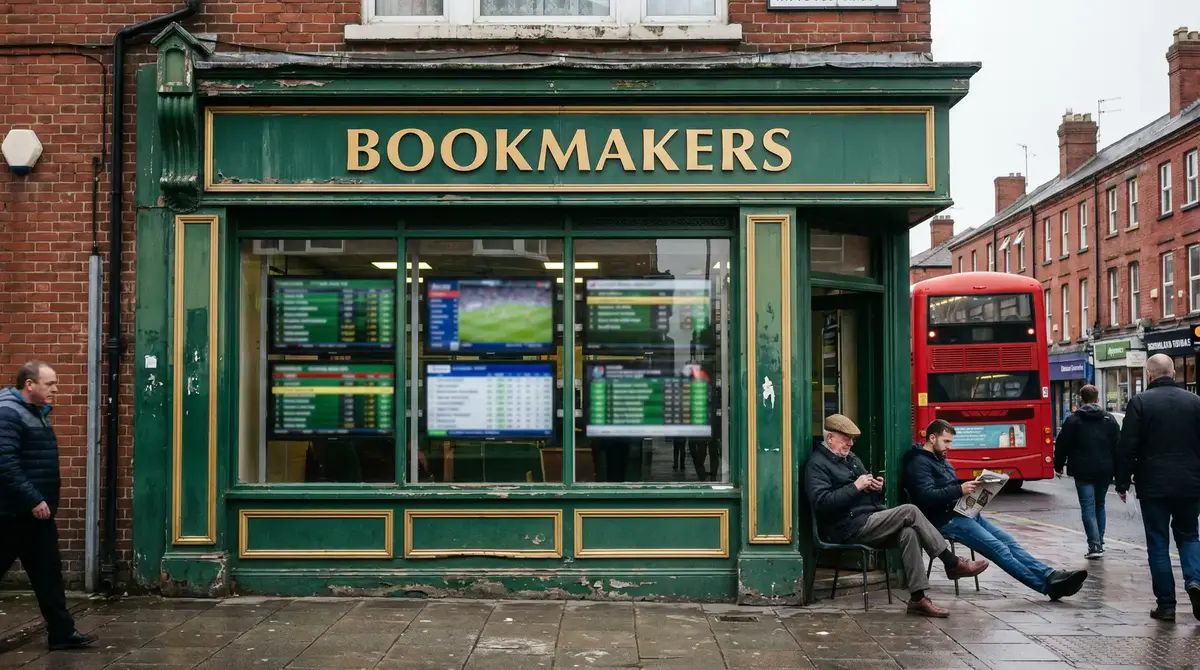
Understanding this landscape matters because it shapes everything that follows: which markets bookmakers prioritise, where the liquidity sits, how aggressively operators compete on odds, and — critically — how regulation responds. A market this size attracts serious regulatory attention, and the changes introduced over the past two years have fundamentally altered how operators interact with customers. Every section of this guide connects back to these numbers, because you can't make informed betting decisions without understanding the environment you're operating in.
Premier League Betting: The Market Everyone Watches
Here's a number that still surprises people when I mention it: 5.8% of all UK adults bet on live football, making it the country's single most popular sport for wagering. The Premier League accounts for the lion's share of that activity, and it's not difficult to see why. Twenty clubs, 380 matches per season, global broadcast coverage, and more data available per match than any other league on the planet. For bookmakers, the Premier League is the product that drives everything else.
Live football is the UK's most popular sport for betting, with 6% of all adults actively placing football bets. The Premier League's global profile means its matches attract the deepest liquidity and the tightest odds margins of any domestic league.
The depth of markets available on a typical Premier League fixture is extraordinary by any historical standard. A Saturday 3pm kickoff between two mid-table sides will offer well over a hundred individual betting markets — match result, correct score, both teams to score, goalscorer markets, corners, cards, half-time result, Asian handicaps, player props, and every conceivable combination through bet builders. This market depth is both an opportunity and a trap: more options mean more ways to find value, but they also mean more ways to overcomplicate selections and bleed money on low-probability bets.
For bettors, the Premier League's biggest advantage is transparency. Expected goals data, possession metrics, pressing intensity, shot maps — the analytical infrastructure around the top flight is so developed that any motivated punter can build a genuine information framework. The challenge is that bookmakers have access to the same data, plus internal modelling teams, which means finding consistent edges on PL match result markets requires more than a casual glance at the league table.
I've spent a lot of time analysing where those edges actually appear in Premier League betting, and the answer is more nuanced than most punters expect. The outright markets — title winner, top four finish, relegation — behave very differently from individual match markets, and the commercial landscape around the league, particularly with the gambling sponsorship changes taking effect from the 2026/27 season, is reshaping how operators engage with PL audiences.
What matters from a pillar perspective is this: the Premier League is the most liquid, most analysed, and most competitive football betting market in the UK. That makes it simultaneously the easiest league to bet on and the hardest league to beat.

EFL Betting: Different Rules Below the Top Flight
The first time I seriously studied Championship, League One, and League Two data side-by-side, my initial reaction was that I'd been approaching lower-league betting completely wrong. I'd been treating EFL matches like slightly worse Premier League matches — same logic, adjusted for quality. They're not. The statistical profiles of these divisions diverge from the top flight in ways that fundamentally change which bets make sense.
| Factor | Premier League | EFL (Championship / L1 / L2) |
|---|---|---|
| Draw frequency | Lower — top sides dominate | Significantly higher, especially League One/Two |
| Goals per match | Higher average | Lower — Under 2.5 goals more reliable on away matches |
| Market depth | 100+ markets per match | 30-60 markets, fewer player props |
| Odds margin | Tightest in football | Wider — less liquidity, more overround |
| Data availability | Comprehensive xG, tracking data | Limited — basic stats only below Championship |
The EFL — encompassing the Championship, League One, and League Two — has been sponsored by Sky Bet for thirteen consecutive seasons, and the association between the lower leagues and betting runs deep. The second, third, and fourth tiers of English football officially carry Sky Bet in their names. But sponsorship aside, the betting dynamics of these divisions are genuinely distinct from Premier League football.
In the lower leagues, draws are significantly more common than in the Premier League. Home advantage is more pronounced, squad rotation happens less predictably, and the information asymmetry between bookmakers and bettors is greater — which cuts both ways. Bookmakers devote fewer analytical resources to pricing League One and League Two matches, meaning their odds can be softer. But you'll also find fewer markets available per match and less liquidity, which limits how much you can stake before moving the price.
The Under 2.5 goals market is one of the most consistently reliable bets for EFL away fixtures. Scoring rates drop noticeably outside the top flight, and the tactical conservatism of lower-league managers — many of whom are fighting for their jobs with smaller squads and tighter budgets — produces tighter, more attritional matches than the average Premier League encounter.

I cover the specifics of each EFL division in detail in my EFL betting guide, including how Championship play-off markets behave, why League One draw patterns create specific opportunities, and what the limited data environment in League Two means for your approach.
The differences between PL and EFL markets aren't just about quality — they're about which bet types work, how odds are priced, and where the genuine inefficiencies hide. The next section breaks down the market types themselves.
Betting Markets: Every Bet Type Worth Understanding
A colleague once told me that modern football betting is like a restaurant with a 200-item menu — most people order the same three dishes. He wasn't wrong. Despite the staggering variety of markets available on any given matchday, the vast majority of UK bettors gravitate toward a handful of familiar bet types. With 290 million online bets placed monthly on real sporting events in the UK, understanding what you're actually choosing between matters more than most people realise.
Match Result (1X2)
The foundational market. Pick Home, Draw, or Away. Simple, liquid, and where most bettors start.
Both Teams to Score (BTTS)
Yes or No — will both sides find the net? Popular for its simplicity and independence from which team wins.
Over/Under Goals
Bet on total match goals relative to a line (e.g. Over 2.5). The go-to market for punters focused on match tempo rather than outcome.
Accumulators
Multiple selections combined into one bet. All legs must win. High potential returns, low probability — the bookmaker's best friend.
Bet Builders
Combine multiple markets from a single match (e.g. Team A to win + Over 2.5 goals + Player X to score). Correlation matters enormously.
Goalscorer Markets
First, last, or anytime goalscorer. Player-specific bets that demand squad knowledge and an understanding of void rules.
Handicap and Asian Handicap
Level the playing field by giving one team a virtual head start. Asian handicaps eliminate the draw as an outcome.
Player Props and Specials
Shots, tackles, cards, corners — stat-based individual markets that reward granular analysis.
Each of these markets behaves differently depending on which league you're betting on, and that's a point most guides completely miss. A BTTS bet on a Premier League match between two attacking sides operates under a completely different statistical profile from the same bet on a League Two fixture where clean sheets are common and 1-0 is the most frequent scoreline.
Example: Reading a Match Result Market
Suppose a bookmaker prices a match as follows: Home 6/4, Draw 23/10, Away 7/4. In fractional odds, 6/4 means a £10 stake returns £25 (£15 profit + £10 stake). The implied probability of 6/4 is 40% — calculated as 4 / (6 + 4) = 0.40. Add up all three implied probabilities — Home 40%, Draw 30.3%, Away 36.4% — and you get 106.7%. That extra 6.7% above 100% is the bookmaker's overround: their built-in margin. Understanding this margin is essential because it tells you exactly how much the odds are working against you before a ball is kicked.
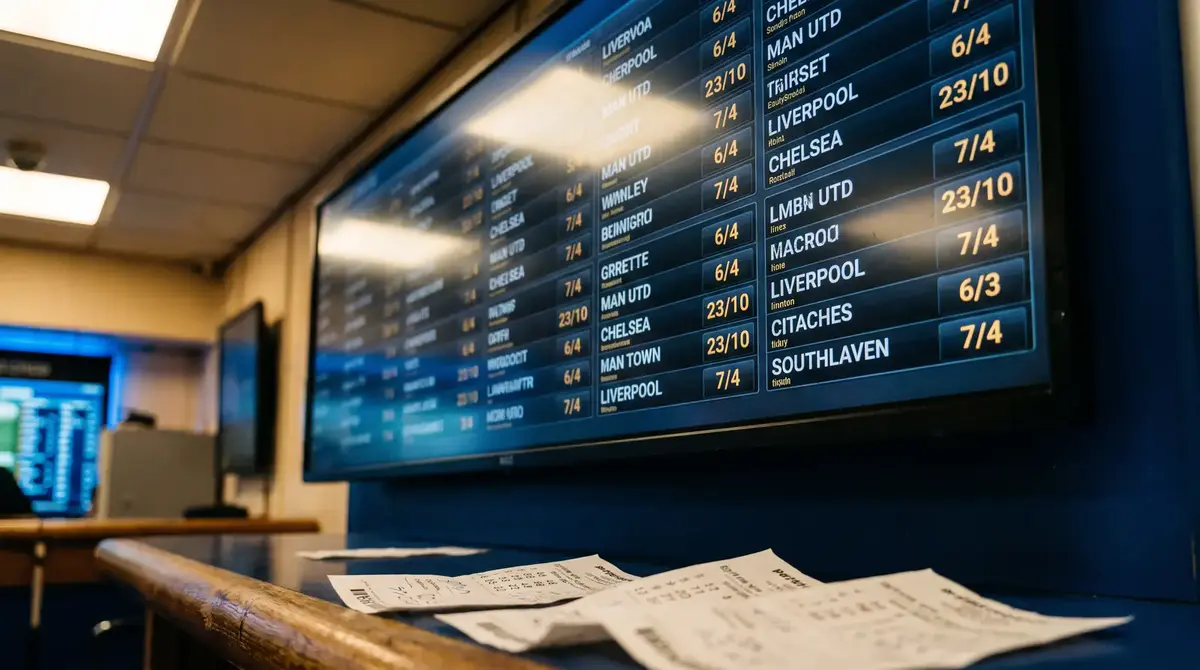
The market types that suit your approach depend on your analytical strengths, the leagues you follow, and how much complexity you're comfortable with. Match result and over/under goals are where liquidity is deepest and margins tightest. Goalscorer markets and player props offer higher margins for the bookmaker but also more scope for informed bettors to exploit pricing errors, particularly in less-followed leagues. A comprehensive breakdown of every market type, including how bet builders actually work and the correlation traps that catch most punters, is available in my football betting markets guide.
The critical takeaway is that choosing a market is itself a strategic decision. Too many bettors pick the market after they've decided which team they fancy, rather than identifying which market best captures their analysis. If you believe a match will be tight and low-scoring, the Under 2.5 goals market expresses that view far more precisely than backing a 1-0 correct score at 6/1.
Tool · Bookmaker margin
Every price has a price
Add up the implied probabilities of a match result market and you never get 100% — you get more. That excess is the overround: what the book charges you before a ball is kicked. Type in any three prices, in fractions or decimals, and see the margin, the true price behind each selection, and what the whole book returns.
2.50 decimal
3.30 decimal
2.75 decimal
What the same margin does to an accumulator
The margin doesn't get added once. It multiplies with every leg you add, because each selection is priced with its own cut built in. Tap a bar to see the damage at that number of legs — the figures use the margin from the book above.
Assumes every leg is priced with the same margin and that your selections are no better than the market's. It isn't a prediction of one bet — it's the structural cost of the format over many of them.
How the true price is worked out. Implied probability is 1 ÷ decimal odds. True prices remove the
margin proportionally across all three outcomes — the standard method, though bookmakers rarely spread
their margin evenly, so favourites usually carry less of it than outsiders. Odds are examples you enter,
not live pricing.
18+ only. A smaller margin makes a bet cheaper, never profitable. Gambling carries risk —
only stake what you can afford to lose. Support: GambleAware and the National Gambling Helpline; block
access to all licensed operators through GamStop.
Strategy Fundamentals: What Separates Profitable Bettors from the Rest
Early in my career as an analyst, I tracked every bet I placed for an entire season — 312 selections across all four divisions. My strike rate was 48%, which felt decent. My return on investment was minus 7.2%, which felt less decent. The lesson was brutal and essential: winning bets and making money are not the same thing. Strategy isn't about picking more winners. It's about ensuring the odds you take consistently exceed the true probability of the outcome.
Live betting now accounts for roughly 30% of all online sports bets placed in the UK, and that figure has been climbing steadily. The expansion of in-play markets has created a second strategic dimension that didn't meaningfully exist fifteen years ago — you're no longer just deciding what to bet on, but when. A pre-match analysis can be entirely correct about a match's trajectory, but if you don't have a framework for whether to bet before kickoff or during the match, you're leaving value on the table.

Do
- Track every bet in a spreadsheet — stake, odds, expected value, result. Without records, you have opinions, not a strategy.
- Set a fixed bankroll and stake a consistent percentage per bet (1-3% is the standard). Flat staking removes emotion from the equation.
- Compare odds across multiple bookmakers before placing any bet. A 5% difference in odds compounds dramatically over hundreds of selections.
- Specialise. You don't need to cover every league and every market. Depth of knowledge in one area beats surface-level coverage of everything.
- Use closing line value as your benchmark — if the odds you took are consistently better than the closing price, your process is sound.
Don't
- Chase losses by increasing stakes after a bad run. Variance is real, and doubling down magnifies it.
- Treat accumulators as a strategy. Bookmakers love accas because the overround multiplies with each leg. Use them sparingly and only with genuinely correlated selections.
- Ignore the draw. In English football — especially League One and League Two — draws represent a huge proportion of outcomes that most casual bettors systematically underestimate.
- Bet on every match. The ability to skip a matchday because nothing offers value is the single hardest skill in sports betting.
- Follow tipsters without understanding their reasoning. A tip without an analytical rationale is a coin flip with better marketing.
The bedrock of any serious approach is value identification — the discipline of comparing what you believe the true probability of an outcome to be against the implied probability embedded in the odds. This requires building your own model, however simple, rather than relying entirely on the bookmaker's pricing. If your analysis says a team has a 55% chance of winning and the odds imply 45%, you have a value bet. If your analysis and the odds align at 55%, you don't — regardless of how confident you feel about the result.
I've written extensively about value identification, bankroll management, in-play tactics, and common analytical mistakes in my football betting strategy guide. But the fundamental truth is straightforward: profitable betting is systematic, boring, and relentless. It's the opposite of the excitement-driven punt that most people associate with football betting. If that sounds tedious, you're hearing it correctly — and that's precisely why it works.
Strategy gives you a framework for deciding what to bet on. The next decision is equally important: where you place those bets.
Choosing a Bookmaker: What Actually Matters Beyond the Welcome Offer
I've opened accounts with more than twenty bookmakers over the years, and the pattern is always the same: the sign-up process emphasises the bonus, the app store listing emphasises the features, and the actual experience of betting there — odds quality, market depth, how quickly they restrict winning accounts — gets mentioned nowhere. The welcome offer is the least important factor in choosing where to bet, but it's the one the entire industry pushes hardest.
Online gambling is the largest segment of the UK betting industry, accounting for 78.5% of total revenue in 2024. The UK currently has 8,148 licensed gambling premises, including 5,669 betting shops, but the centre of gravity has shifted decisively to digital platforms. That means the bookmaker you use online is your primary betting environment, and the differences between operators are more significant than most punters appreciate.
Before Opening a New Account
- Verify the operator holds a current UK Gambling Commission licence — check the UKGC register directly, not just a logo on the homepage.
- Compare odds on the specific markets you bet on, not headline prices on marquee matches that may be artificially boosted.
- Check the depth of football markets offered — how many bet types are available for Championship and League One matches, not just the Premier League.
- Test the cash out functionality before committing — some operators offer full, partial, and auto cash out; others limit or restrict it on certain bet types.
- Read the terms on responsible gambling tools: deposit limits, session time reminders, cooling-off periods. These protections should be easy to find and easy to activate.
- Ignore best-of lists. Evaluate operators against your own betting behaviour, not someone else's ranking criteria.
| Evaluation Criteria | Why It Matters | How to Assess |
|---|---|---|
| UKGC Licensing | Legal protection, fund segregation, dispute resolution | Search the Gambling Commission public register |
| Odds Competitiveness | 0.5% margin difference compounds over hundreds of bets | Compare 20+ markets on the same fixture across operators |
| Market Depth (EFL) | PL coverage is universal; EFL depth varies dramatically | Check available markets on a League One midweek fixture |
| Cash Out Availability | Flexibility for in-play management and risk reduction | Place a small bet and test partial/auto cash out options |
| Account Longevity | Some operators aggressively restrict profitable accounts | Research bettor forums for restriction reports on each operator |
The practical reality is that serious bettors maintain accounts with multiple operators — not for bonus collection, but because odds vary across bookmakers and having access to the best available price on each selection is the simplest edge available. If one operator offers 2.10 on a match result and another offers 2.20, taking the 2.20 improves your expected return by nearly 5% on that bet alone. Over a season of regular betting, that compounding effect is substantial.

My detailed analysis of how to evaluate UK bookmakers — covering licensing, market depth, mobile features, cash out mechanics, and the reality behind welcome bonuses — is in the best betting sites UK guide. The short version: pick operators based on consistent odds quality and market coverage for the leagues you actually bet on, not on the size of a one-time promotional offer.
Mobile Betting: How Phones Became the Default Platform
There's a moment during every Premier League Saturday that illustrates the mobile betting revolution better than any statistic. At 2:55pm, five minutes before kick-off, the volume of bets placed spikes dramatically — and almost all of it happens on phones. People standing in pub beer gardens, sitting on sofas, walking to the stadium. Nobody's booting up a laptop. The shift happened gradually, then all at once, and it's reshaped how bookmakers design products, price markets, and think about customer engagement.
Mobile devices now account for 71% of all online bets placed in the UK, up from 58% in 2021. Among 18-24 year olds, that figure rises to 76%.
The speed of this transition has been remarkable. In 2021, desktop still held a meaningful share of betting activity. Five years later, mobile is so dominant that several operators have effectively deprioritised their desktop experience, building features for the app first and retrofitting them to the website. Live streaming, push notifications for odds movements, one-tap bet placement, biometric login — these are all mobile-first innovations that have fundamentally changed the betting experience.
For bettors, the implications cut both ways. The convenience of mobile betting makes it easier to act on analysis in real time, particularly for in-play markets where seconds matter. If you spot a goal kick pattern at the 60th minute that suggests a late push from the away side, you can place a bet on Next Goal: Away before the tactical shift is fully reflected in the odds. That wasn't practically possible when betting required a desktop or a walk to the betting shop.
The downside is equally real. The same convenience that enables quick, informed betting also enables impulsive, emotion-driven betting. Having a sportsbook permanently available in your pocket means the barrier between thinking "I should bet on this" and actually placing money is effectively zero. Every reputable UK operator now offers in-app responsible gambling tools — deposit limits, session time alerts, cooling-off periods — and the 2025/26 regulatory changes have made some of these mandatory rather than optional. If you bet on your phone, activating these tools isn't overcautious; it's baseline discipline.
The market concentration around mobile also affects which bookmakers compete effectively. An operator with a brilliant desktop site but a sluggish, poorly designed app is functionally irrelevant to the majority of bettors. App performance — load speed, navigation clarity, the smoothness of in-play bet placement — has become a core competitive differentiator, alongside the traditional factors of odds quality and market depth. When 95% of online gambling in the UK happens from home, the betting app is your living room sportsbook.

UK Regulation: The Rules That Shape Every Bet You Place
I had a conversation with a mid-stakes bettor last year who was furious about his account being restricted after depositing £300 in a single month. "I'm an adult making my own decisions," he said. What he didn't know was that his deposit had triggered an affordability check — a relatively new regulatory mechanism that applies to all licensed UK operators. Regulation in UK gambling isn't abstract policy. It directly affects your betting experience, from how much you can deposit to which operators can legally take your bets.
Every aspect of legal football betting in the UK is overseen by the Gambling Commission (UKGC). Only operators holding a valid UKGC licence can legally offer gambling services to UK residents. Betting with an unlicensed operator means you have no regulatory protection — no dispute resolution, no fund segregation requirements, and no recourse if something goes wrong.
The most significant regulatory development in recent years is the statutory levy on gambling operators, which came into force on 6 April 2025. This levy raises £100 million annually, ring-fenced for research, prevention, and treatment of gambling-related harm. Before the levy, the industry relied on a voluntary contribution system that critics argued was inadequate and created conflicts of interest. The statutory levy replaced that with a mandatory, government-enforced funding mechanism.
Affordability checks represent another structural change. Since 28 February 2025, operators must conduct financial vulnerability assessments when a customer reaches £150 in net deposits within a rolling 30-day window. These checks — sometimes called "frictionless" because they use credit reference data rather than requiring document uploads — are designed to identify customers who may be spending beyond their means. They've proved controversial among recreational bettors who view them as intrusive, but they represent the regulatory direction of travel: more consumer protection, less operator discretion.

Lisa Nandy, Secretary of State for Culture, Media and Sport, framed the regulatory approach clearly: fans deserve to know the sites they're using are properly regulated, with the right protections in place. She specifically highlighted the problem of unlicensed gambling operators sponsoring major football clubs, raising their profile and potentially directing fans toward sites that don't meet UK regulatory standards.
The UK maintains one of the most comprehensive gambling regulatory frameworks in the world. The Gambling Commission holds the power to fine operators, revoke licences, and impose conditions on how gambling products are offered. In the online space, operators must segregate customer funds, display responsible gambling messaging, provide self-exclusion options, and comply with anti-money laundering requirements. The enforcement is real: regulatory actions, including significant financial penalties, are published regularly and have materially affected several major operators.
For bettors, the practical impact of regulation is felt in three areas: account verification (you'll need to prove your identity before withdrawing), deposit management (affordability checks may limit how quickly you can fund your account), and market access (certain bet types carry specific regulatory conditions). None of this is optional or negotiable — it applies to every UKGC-licensed operator equally. The scale of the industry — thousands of licensed premises and a remote betting sector generating £16.8 billion in GGY annually — demands this level of oversight, and understanding how regulation works puts you in a stronger position as a bettor.
The Gambling Shirt Sponsorship Ban: A Market in Transition
The Premier League became the first major UK sports league to voluntarily withdraw gambling brands from front-of-shirt sponsorship, effective from the 2026/27 season. In the 2025/26 season, eleven clubs still carried gambling sponsors on their matchday shirts. The transition away from those deals has been anything but smooth — up to nine clubs had yet to secure replacement sponsors as of early 2026, with potential revenue losses estimated at £80 million across the league.
Joe Williams, co-founder of sports agency WH Sports, described it as the biggest shake-up in the front-shirt market in the Premier League for twenty years. There's excitement about new commercial possibilities, but also real trepidation — especially for clubs now planning life after gambling sponsors.
The ban applies specifically to the front of matchday shirts. Other forms of gambling advertising in football — sleeve sponsors, perimeter boards, stadium naming, digital advertising — remain permissible under current regulations, though the political momentum suggests further restrictions may follow.For bettors, the sponsorship ban doesn't change what you can bet on or where, but it signals a broader shift in how closely the betting industry and English football can publicly align.

Full analysis of the ban's timeline, financial impact on clubs, operator responses, and wider implications for the relationship between football and betting is covered in my dedicated piece on the gambling sponsorship ban in football — one of the most significant structural changes to hit English football's commercial model in two decades.
Responsible Gambling: The Numbers Behind the Harm and the Tools That Help
I've had this conversation with friends more than once: someone asks how I can spend a decade analysing betting markets without being concerned about gambling harm. The honest answer is that concern is precisely why I focus on data-driven approaches rather than tip-based punting. The harm is real, it's measurable, and anyone who writes about football betting without addressing it is being irresponsible.
The NHS Adult Psychiatric Morbidity Survey from 2023/24 found that 0.4% of UK adults score 8 or above on the Problem Gambling Severity Index — the threshold for problem gambling. That might sound small until you translate it into real people: roughly 200,000 adults. A further 1.6% score 3 or above, indicating at least moderate risk. Men are affected at more than double the rate of women — 2.2% versus 1.0% for moderate-to-problem gambling. Among 18-24 year olds, the numbers are starker: 21.9% show some level of gambling risk, with 5.3% in the highest-risk category. That age group is the most vulnerable, and it's also the demographic most heavily targeted by mobile-first betting products and social media marketing.
Zoë Osmond OBE, CEO of GambleAware, put it plainly: no form of gambling is completely without risk. That statement isn't a formality. It's a clinical assessment grounded in extensive research on how different types of gambling — from lotteries to in-play sports betting — generate different risk profiles. Online sports betting, with its speed, accessibility, and frequency of opportunities, sits toward the higher-risk end of that spectrum.
The Office for Health Improvement and Disparities estimates the health and social costs of gambling-related harm at between £1.05 billion and £1.77 billion annually. This includes NHS treatment, mental health services, relationship breakdown, financial insolvency, and associated social welfare costs. The statutory levy of £100 million introduced in April 2025 is intended to address these costs, though many health professionals argue it falls short of what's needed.
Every UKGC-licensed bookmaker is required to offer a set of responsible gambling tools: deposit limits (daily, weekly, or monthly), session time reminders, cooling-off periods, and access to self-exclusion via GamStop — the national scheme that blocks your access to all licensed operators for a chosen period. These aren't optional extras. They're legal requirements, and using them is entirely compatible with a serious, analytical approach to betting. In fact, deposit limits are one of the most effective bankroll management tools available — they enforce the discipline that most bettors struggle to maintain on their own.
If you or someone you know is experiencing gambling-related harm, free professional support is available through GambleAware and the National Gambling Helpline. Recognising the risk early — before financial or emotional consequences escalate — is the most important step.

Frequently Asked Questions About League Betting in the UK
What types of bets can you place on English football leagues?
UK bookmakers offer a wide range of bet types on English football, from basic match result (1X2) and both teams to score (BTTS) to more complex options like correct score, Asian handicaps, goalscorer markets, player props, accumulators, and bet builders. The number of available markets varies by league — a Premier League fixture typically offers over a hundred markets, while a League Two match may have thirty to sixty. In-play betting expands these options further, with live odds on next goal, next corner, and match outcome updated in real time during the match.
How do betting odds work for Premier League and EFL matches?
Betting odds represent the bookmaker's assessment of probability and determine your potential return. In the UK, odds are most commonly displayed in fractional format (e.g. 5/2, meaning a £10 bet returns £35) or decimal format (e.g. 3.50, meaning a £10 bet returns £35). Every set of odds carries an implied probability — the bookmaker's estimated chance of that outcome occurring. The sum of implied probabilities across all outcomes in a market exceeds 100%, and that excess is the bookmaker's margin (overround). Premier League matches generally have tighter margins than EFL matches because of higher betting volume and greater competition between operators.
Is online football betting legal in the UK?
Online football betting is fully legal in the UK for adults aged 18 and over, provided you use an operator licensed by the UK Gambling Commission (UKGC). All licensed operators must comply with strict regulatory requirements including customer identity verification, fund segregation, anti-money laundering checks, and responsible gambling provisions. Betting with an unlicensed operator is not illegal for the individual, but it offers no regulatory protection — meaning no recourse for disputes, no guarantee your funds are safe, and no requirement for the operator to meet any consumer protection standards.
What is the difference between betting on the Premier League and lower leagues?
The differences go beyond quality of football. Premier League matches attract the deepest betting liquidity, the tightest odds margins, and the most comprehensive range of markets. Lower leagues — Championship, League One, League Two — have wider bookmaker margins, fewer available markets per match, and less publicly available analytical data. Statistically, lower leagues produce more draws, fewer goals per match, and stronger home advantage effects. Bookmakers allocate fewer pricing resources to lower-league matches, which can create softer odds and greater potential for informed bettors to find value — but also means less liquidity and lower maximum stake limits.
How does in-play betting work for football matches?
In-play (live) betting allows you to place bets during a football match, with odds updating in real time based on the match state — score, time elapsed, momentum, red cards, and other events. Approximately 30% of all online sports bets in the UK are placed in-play. Available live markets typically include next goal, match result, total goals, corners, and cards. Odds move rapidly during key moments (goals, penalties, red cards), and most bookmakers briefly suspend markets around significant events before recalculating. Cash out — the option to settle a bet early for a calculated return — is most commonly used during in-play betting.
What are accumulator bets and how do they work in league football?
An accumulator (acca) combines multiple individual selections into a single bet. All selections must win for the bet to pay out. The odds of each selection are multiplied together, producing potentially large returns from small stakes — which is exactly why bookmakers promote them heavily. A four-fold accumulator at average odds of 2.0 per leg offers a combined return of 16.0, but the probability of all four selections winning is roughly 6.25% in a coin-flip scenario. In practice, the bookmaker's margin on each leg compounds through the accumulator, making the true expected value of most accas significantly negative. Some bookmakers offer acca insurance (refunding the stake if one leg loses), which partially mitigates this but doesn't eliminate the structural disadvantage.
How is responsible gambling regulated in the UK?
The UK has one of the most developed responsible gambling frameworks globally, overseen by the Gambling Commission. Licensed operators must offer deposit limits, session time reminders, cooling-off periods, and self-exclusion via the national GamStop scheme. Since April 2025, a statutory levy on operators raises £100 million annually for gambling harm research, prevention, and treatment. Affordability checks, triggered at £150 in net deposits within 30 days, require operators to assess whether customers may be experiencing financial vulnerability. The Gambling Commission can fine operators, revoke licences, and impose conditions for non-compliance with these requirements.
Where These Numbers Come From
All statistics cited in this guide are drawn from primary institutional sources: the UK Gambling Commission's quarterly industry statistics and Gambling Survey for Great Britain (GSGB Wave 4), Grand View Research and Technavio market projections, NHS England's Adult Psychiatric Morbidity Survey, the Office for Health Improvement and Disparities, and official releases from the Premier League, English Football League, and the Department for Culture, Media and Sport. Expert commentary is attributed by name and role.
leaguebettips.com is an independent analytical resource. We are not a bookmaker, do not accept bets, and do not receive payment from gambling operators for editorial coverage. Market examples and odds calculations throughout this guide use hypothetical figures for illustrative purposes only and do not represent live pricing from any specific operator. All content is reviewed against the latest available regulatory data at time of publication.
Articles
Written by the editors at leaguebettips.com.
