


I have held accounts with more than a dozen UK bookmakers over the past ten years, and the one thing I have learned is that the “best” betting site depends entirely on what you actually do with it. A sharp bettor chasing Asian Handicap value on League One matches has completely different needs from a recreational punter building Saturday afternoon accumulators. Yet most comparison sites treat bookmaker selection like a ranking exercise — stack them up, slap a score on each, and push the one paying the highest affiliate commission. That approach wastes your time.
What I am doing here is different. Instead of a league table of operators, I am laying out the criteria that matter when choosing a betting site for football, explaining how to evaluate each one, and letting you make the decision based on your own priorities. The UK has one of the most regulated betting markets in the world — 8,148 licensed gambling premises including 5,669 betting shops, plus hundreds of remote operators licensed by the UK Gambling Commission. The online segment alone accounts for 78.47% of total industry revenue, which means the competition for your account is intense and the differences between platforms are real.
17.4 million UK adults placed bets online in 2024 — roughly one in three. If you are among them, or planning to join them, the operator you choose shapes your experience in ways that go far beyond the welcome offer: odds quality, market range, cash-out functionality, mobile performance, and the responsible gambling tools available to you. This article covers all of it.
Licensing: The Non-Negotiable Starting Point
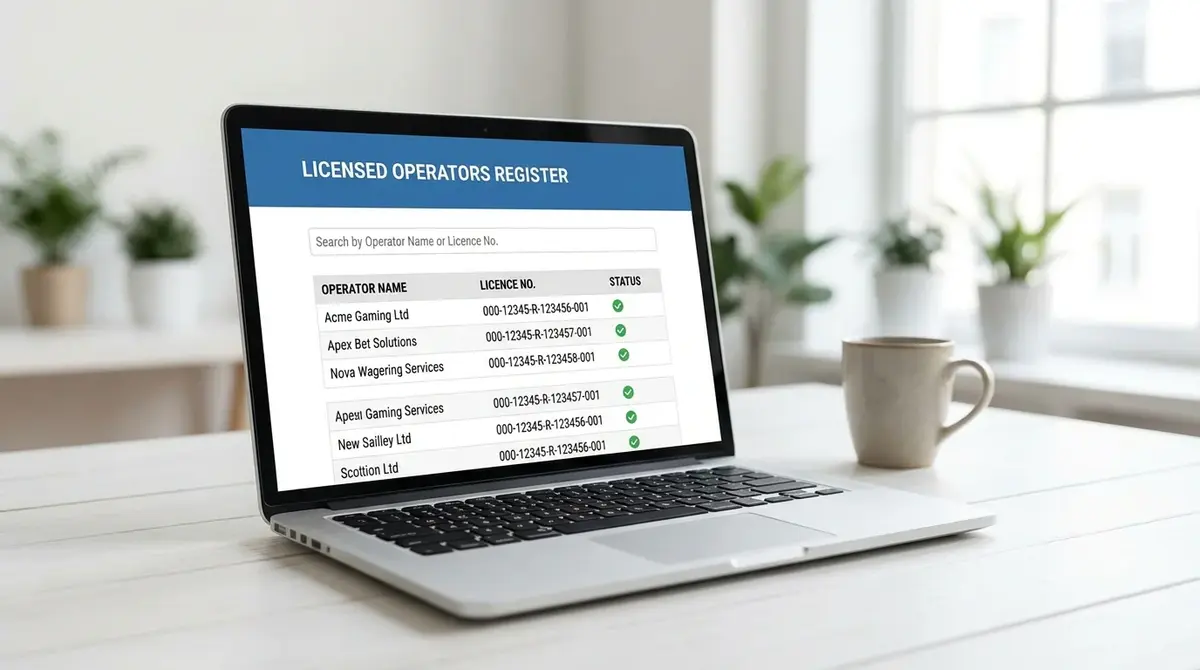
Before you look at a single market or compare a single price, check the licence. Every operator offering gambling services to UK customers must hold a licence from the UK Gambling Commission (UKGC). This is not optional, not aspirational, not a nice-to-have — it is a legal requirement, and betting with an unlicensed operator means you have zero regulatory protection if something goes wrong with your account, your funds, or a disputed settlement.
The UKGC maintains a public register of every licensed operator, and checking it takes thirty seconds. If the bookmaker is not on the register, walk away. The regulated market is already well-served by thousands of licensed premises and hundreds of remote operators; there is no reason to step outside that framework.
What the licence actually guarantees: your funds must be held in a manner that protects them if the operator becomes insolvent (the UKGC grades this as “basic,” “medium,” or “high” protection — check which level your operator provides). The operator must adhere to the Licence Conditions and Codes of Practice (LCCP), which include requirements around fair terms, transparent pricing, and complaint handling. And since April 2025, operators must contribute to a statutory levy of £100 million annually toward research, prevention, and treatment of gambling-related harm.
I have had two experiences with unlicensed or offshore operators early in my betting career, and both ended badly — one withheld a withdrawal for six weeks, the other changed the terms of a settled bet retroactively. Since switching exclusively to UKGC-licensed operators, I have had disputes resolved through the formal complaint process every single time. The system is not perfect, but it exists, and it works materially better than having no recourse at all.
Market Depth: What Actually Matters on the Match Card
The number of markets an operator lists per match is one of the most visible differentiators — and one of the most misleading. A bookmaker advertising “200+ markets on every Premier League match” sounds impressive until you realise that half of those markets are variations on the same theme (total goals at six different thresholds, corners at four different lines, cards in three different formats). What matters is not the headline number but the depth in the specific markets you bet on.
If you primarily bet match results and over/under goals, virtually every licensed operator covers your needs. The differences emerge when you move into Asian Handicaps, player props, half-time markets, or niche offerings like corners and booking points. Some operators have strong in-house trading teams for Premier League and Championship fixtures but rely on third-party feeds for League One and below, which means the market range and pricing quality drop sharply once you step outside the top two divisions.
My practical test is simple: pick three fixtures I intend to bet on, check the available markets across four or five operators, and compare the odds on the specific selections I am interested in. A bookmaker might list fewer markets overall but offer a better price on the over 2.5 goals line for a Championship Tuesday-night fixture — and that better price is worth more to me than 50 additional markets I will never touch. The majority of UK online bettors gravitate toward the same handful of core markets. If you are among the minority who bets on corners, Asian Handicaps, or player-level props, market depth becomes a genuine differentiator rather than a marketing number.
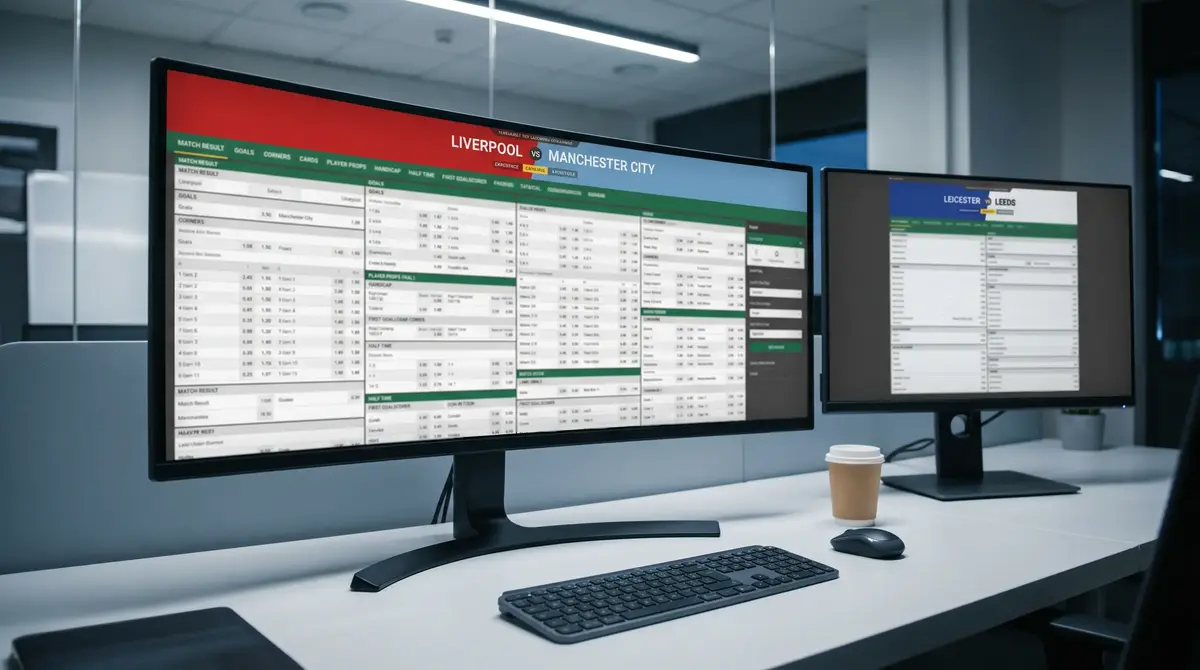
One thing I check that most comparison articles ignore: market availability for lower-league fixtures. An operator that lists 180 markets on Arsenal vs Chelsea but only 25 on a League Two Saturday match is not serving the bettor who specialises below the Premier League. If your focus includes EFL or National League football, test the operator’s depth at those levels before committing.
Mobile Features: Where 71% of Bets Now Happen
Mobile devices now account for 71% of all online bets placed in the UK — up from 58% in 2021. That trajectory is not slowing down. If you are choosing a betting site in 2026, you are almost certainly choosing a betting app, and the quality of that app matters more than the desktop experience for most users.
The best betting apps in the UK share a few common traits that separate them from the mediocre ones. Speed is the most important: the time between tapping a selection and the bet being confirmed should feel instantaneous, particularly for in-play betting where odds move by the second. I have timed bet placement on several major apps, and the difference between the fastest and slowest is about 1.5 seconds — which does not sound like much until you are trying to lock in a price on a live match and the odds have shifted twice before your bet confirms.
Live streaming integration is the second differentiator. Several UK operators offer free in-play streaming of Premier League, EFL, and European fixtures directly through their apps, with the only requirement being a funded account or a recent bet. Streaming quality varies, and there is typically a 3-5 second delay compared to live television — a delay that matters if you are betting in-play on fast-moving markets. But for monitoring matches you have bet on, the convenience of having the stream and bet slip on the same screen is significant.
Push notifications for price changes, team news, and in-play events add another layer. The most sophisticated apps let you customise notifications by market and fixture, which turns your phone into a monitoring tool rather than a distraction. I use notifications selectively — team-news alerts for matches I intend to bet on, and cash-out price updates for active bets — and turn off the promotional spam that every operator defaults to sending.

Cash Out and Operational Tools
Cash out is one of those features that sounds universally positive — lock in a profit or cut a loss before the match ends — until you understand the mechanics. The cash-out amount offered by the bookmaker is not a neutral calculation. It is the bookmaker’s assessment of the current fair value of your bet, minus a margin. That margin means you are almost always receiving less than the true expected value of your position when you cash out.
That said, cash out serves a genuine function in specific situations. If your bet is part of a carefully managed bankroll and the match state has shifted in a way your pre-match analysis did not anticipate — a red card, an early goal that changes the tactical dynamic entirely — cashing out can be a rational decision to reallocate capital rather than riding a position that no longer reflects your original thesis. I use cash out rarely, perhaps once every thirty or forty bets, and only when the match-state change is structural rather than cosmetic.
Partial cash out — taking a portion of the cash-out value while leaving the rest of your bet active — is a more nuanced tool that I find genuinely useful. It lets you bank some return while maintaining exposure to your original selection. Auto cash out, which triggers automatically when the cash-out value reaches a threshold you set in advance, removes the emotional element but requires you to define your exit point before the match starts. Both features are available on most major UK operators, though the specific implementation varies.
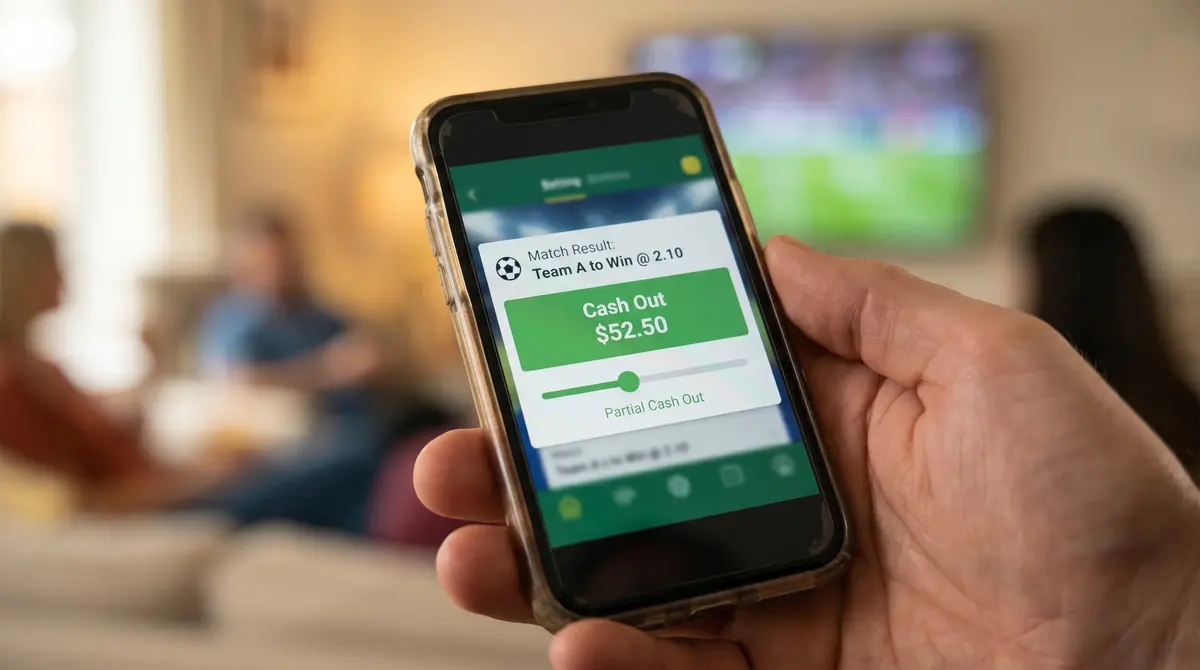
Beyond cash out, look for operational tools that support the way you actually bet. Bet tracking — the ability to filter your betting history by market type, date, and result — is essential for anyone who treats betting as an analytical exercise rather than pure entertainment. Some apps make this easy; others bury it. Early payout triggers on accumulator legs, edit-bet functions that let you swap selections before kickoff, and price-lock features that hold your odds while you finalise a bet slip are all worth checking before you commit to a platform.
Bonuses: What the Fine Print Actually Says
Here is what most comparison sites will not tell you about welcome bonuses: the advertised headline — “bet £10 get £30 in free bets” — is a marketing number, not a financial outcome. The actual value of that offer depends entirely on the wagering requirements, the minimum odds conditions, the expiry window, and whether the free-bet stake is included in any returns. I have seen offers that look generous on the surface but deliver an effective value of less than £5 after you account for all the conditions.
Wagering requirements dictate how many times you need to turn over the bonus or qualifying bet before you can withdraw winnings. A typical UK football welcome offer requires a qualifying bet at minimum odds of 1.50-2.00, with free bets that must be used within seven days on selections at 1.50 or higher. The free-bet stake is not returned with the winnings, which means a £10 free bet at odds of 2.0 returns £10 in profit, not £20. That distinction halves the effective value of the offer compared to what the headline suggests.
Michael Dugher, former chair of the Betting and Gaming Council, has spoken about how the industry “embraced higher standards” across multiple dimensions, but the promotional landscape remains an area where clarity could improve. My advice is to read the full terms of any offer before claiming it, calculate the effective value based on the conditions, and never choose a bookmaker primarily because of a welcome bonus. The bonus is a one-time event; the odds, markets, and platform quality affect every bet you place for months or years afterward.
Ongoing promotions — enhanced odds, price boosts, loyalty programmes, acca insurance — follow the same principle. Each one has conditions that determine the real value. Acca insurance that requires five or more legs at minimum odds of 1.20 per leg and only refunds as a free bet (not cash) is a different proposition from one that refunds in cash on a four-leg accumulator. The devil lives in the terms, and spending ten minutes reading them before you bet is a better use of your time than any tipster thread on social media.

Responsible Gambling Tools: What Operators Must Provide
Every UKGC-licensed operator is required to provide a set of responsible gambling tools, and checking what is available — and how accessible it is within the app or site — should be part of your evaluation process. These are not optional add-ons or corporate virtue signalling. They are regulatory requirements backed by the LCCP, and the quality of their implementation varies significantly between operators.
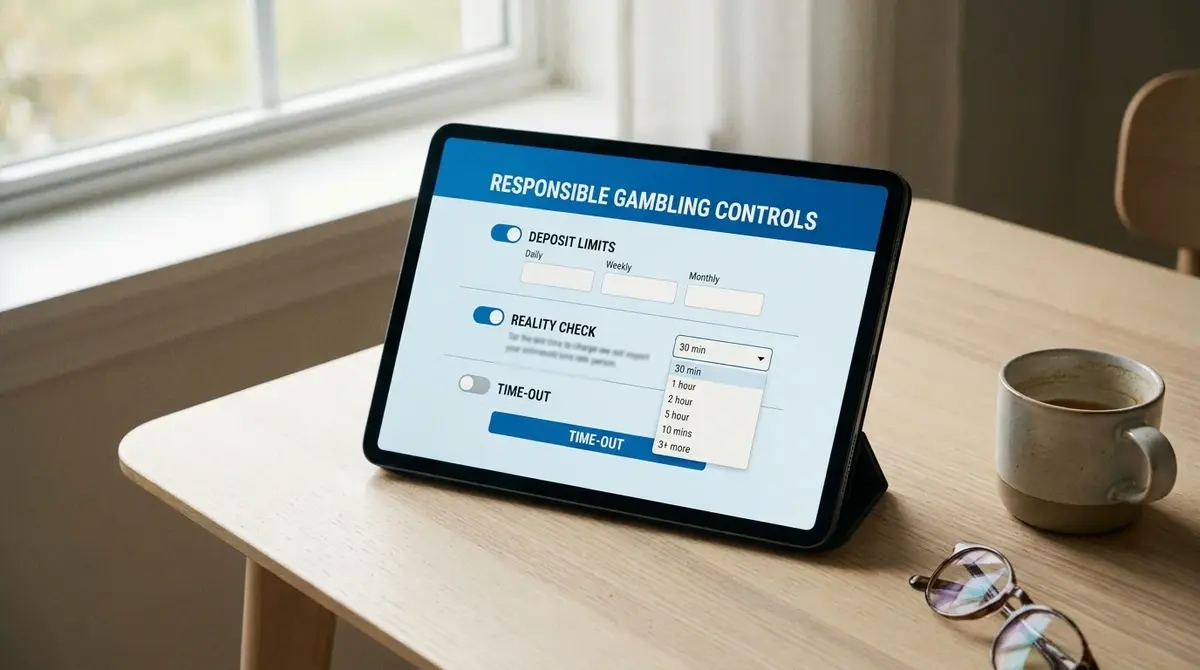
Deposit limits let you set a maximum amount you can deposit within a daily, weekly, or monthly period. Once set, a limit cannot be increased without a cooling-off period (usually 24-48 hours), though it can be decreased immediately. Loss limits and wagering limits offer similar controls on how much you can lose or bet within a timeframe. Reality checks — periodic pop-up notifications reminding you how long you have been in a session and how much you have wagered — are standard across licensed operators, though you can often adjust the frequency.
Time-out and self-exclusion are the more significant interventions. A time-out pauses your account for a period you choose (usually 24 hours to six weeks). Self-exclusion, either through the operator directly or through the national GamStop scheme, blocks access to your account for a minimum of six months. These tools exist because they are needed — the financial vulnerability checks triggered at £150 in net deposits over a rolling 30-day window are a recent addition to the regulatory framework that underscores how seriously the UKGC takes harm prevention.
When I evaluate a new operator, I check three things related to responsible gambling: how many clicks does it take to reach the deposit limit settings from the main betting screen? Does the app surface reality-check notifications by default, or do I have to opt in? And does the operator provide a clear, visible link to external support services? The operators who make these tools easy to find and use are, in my experience, the ones who run the most professionally across every dimension of their product.
Building Your Own Evaluation Framework
Rather than giving you a ranked list of operators, here is the framework I use myself when deciding where to hold active accounts. I maintain accounts with three to four bookmakers at any given time, which gives me enough spread for odds comparison without creating an administrative burden.
Step one: confirm the UKGC licence and check the fund protection level. Step two: test the platform on the specific markets and leagues I bet on — not the Premier League showpiece fixture, but a midweek Championship match and a League One Saturday afternoon game. Step three: compare odds on five consecutive fixtures against two or three competitors. Step four: test the mobile app for bet placement speed, live streaming availability, and cash-out responsiveness. Step five: read the full terms of the current welcome offer and any ongoing promotions. Step six: check the responsible gambling tools and confirm deposit limits can be set before placing a first bet.
That process takes about thirty minutes per operator, and it tells you more than any comparison table. The bookmaker that wins on step three — consistently offering the best odds on the markets you bet on — is usually the right primary account, regardless of where it ranks on someone else’s list. The secondary accounts exist for line shopping and for accessing specific promotions that offer genuine value.
One final thought: your needs will change over time. The bookmaker that suited you as a beginner placing Saturday accumulators may not serve you well if you evolve into an Asian Handicap specialist or a lower-league value bettor. Review your operator mix annually, test new entrants when they launch with competitive terms, and never let inertia keep you on a platform that no longer fits your betting profile.
Articles
Prepared by the leaguebettips.com editorial staff.
