

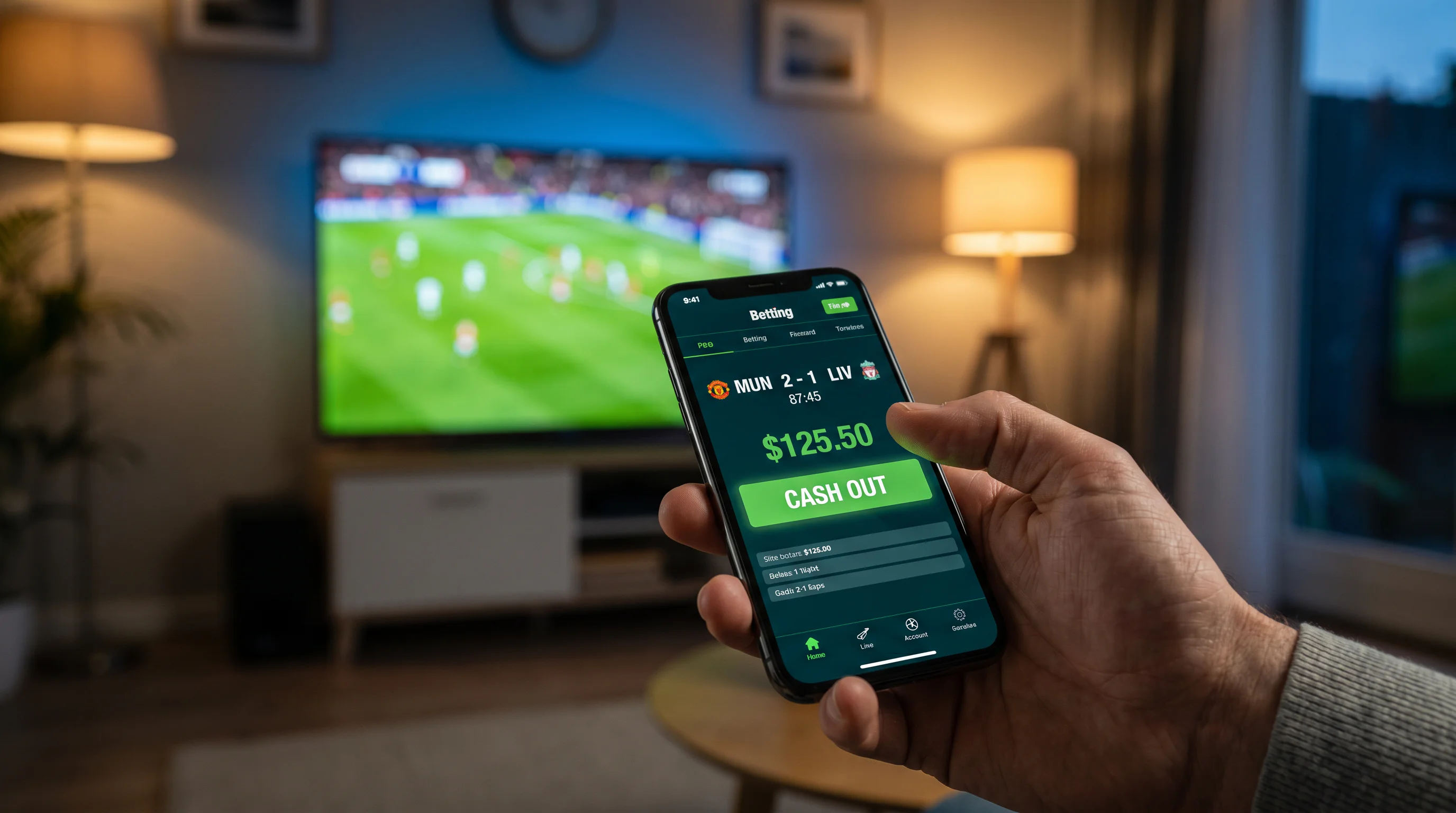
The worst cash out decision I ever made involved a Championship accumulator. Three legs had landed, the fourth was a comfortable 2-0 at half-time, and I was offered £340 against a potential £520 return. I cashed out. The match finished 2-1, my bet would have won, and I’d left £180 on the table because I couldn’t sit with the uncertainty. That experience taught me something that no amount of reading ever could: cash out is a tool for managing positions, not for managing emotions.
Cash out has become one of the most heavily promoted features in UK football betting, and roughly 30% of all online sports bets are placed live — many involving the cash out function during the match. The feature lets you settle a bet before the event concludes, locking in a profit or limiting a loss. In theory, it’s a risk management instrument. In practice, it’s a margin generator for bookmakers disguised as a service for bettors.
How Cash Out Works
When you place a pre-match bet, the bookmaker’s system calculates a running cash out value from kick-off to full-time. This value fluctuates based on the match state — goals, red cards, time elapsed — and the current live odds for your selection. If your bet is heading towards winning, the cash out value rises towards (but never reaches) the full payout. If your bet is heading towards losing, the cash out value falls towards zero.
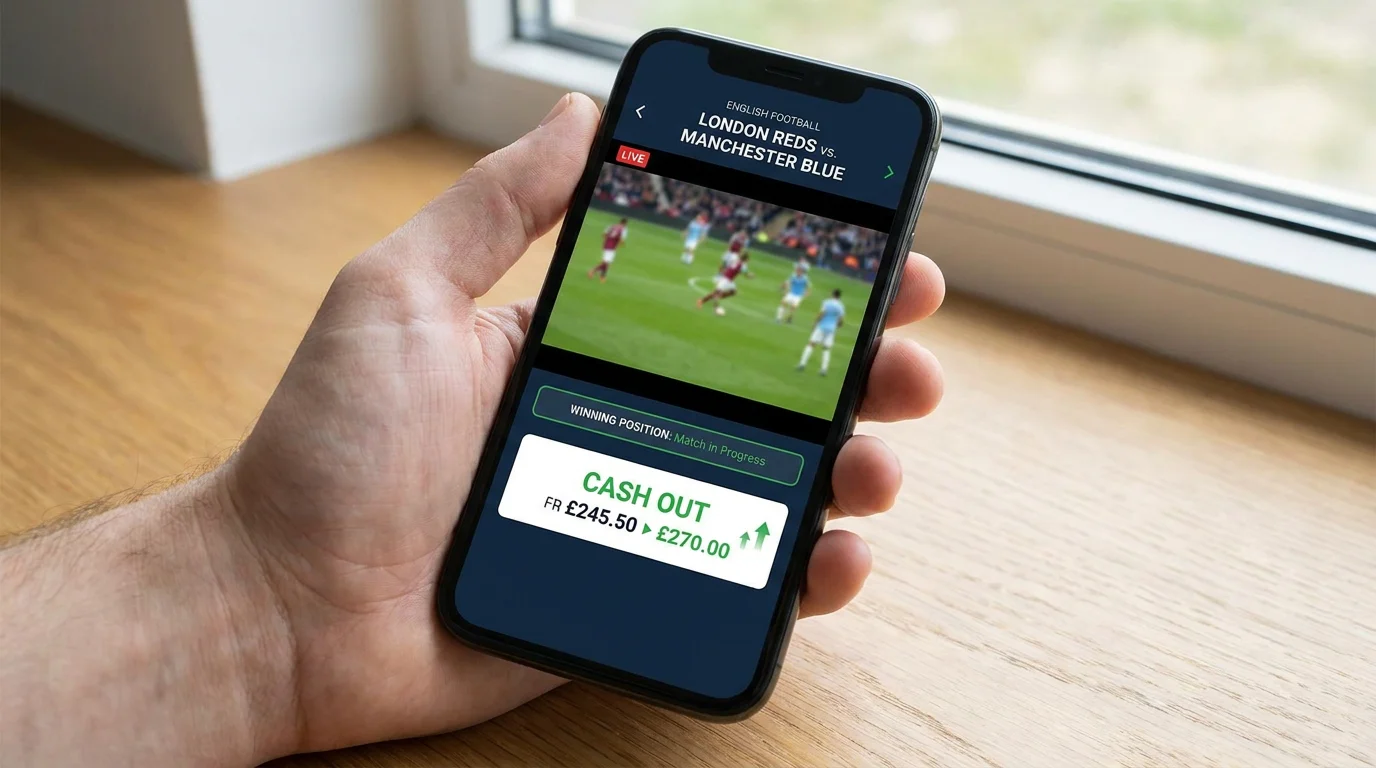
The cash out price is not the fair value of your bet. It’s the fair value minus a margin — typically 3-8%, depending on the operator and the market. This means every time you cash out, you’re accepting a price that’s systematically worse than the theoretical value of your position. The bookmaker profits whether you cash out or let the bet run, but the cash out margin gives them an additional edge on top of the original odds margin.
Think of it this way: if you placed a £10 bet at 5.00 and the live fair value of your bet is now £35, the cash out offer will be somewhere around £32-£34. That difference is the cost of early settlement. Whether it’s worth paying depends entirely on the context.
Partial Cash Out and Auto Cash Out
Partial cash out lets you settle a portion of your bet while leaving the remainder active. If you’re offered a £300 cash out on a bet with a £500 potential return, you can cash out £150 (half) and let the other half ride. This is where the feature becomes genuinely useful for bankroll management rather than pure emotional relief.
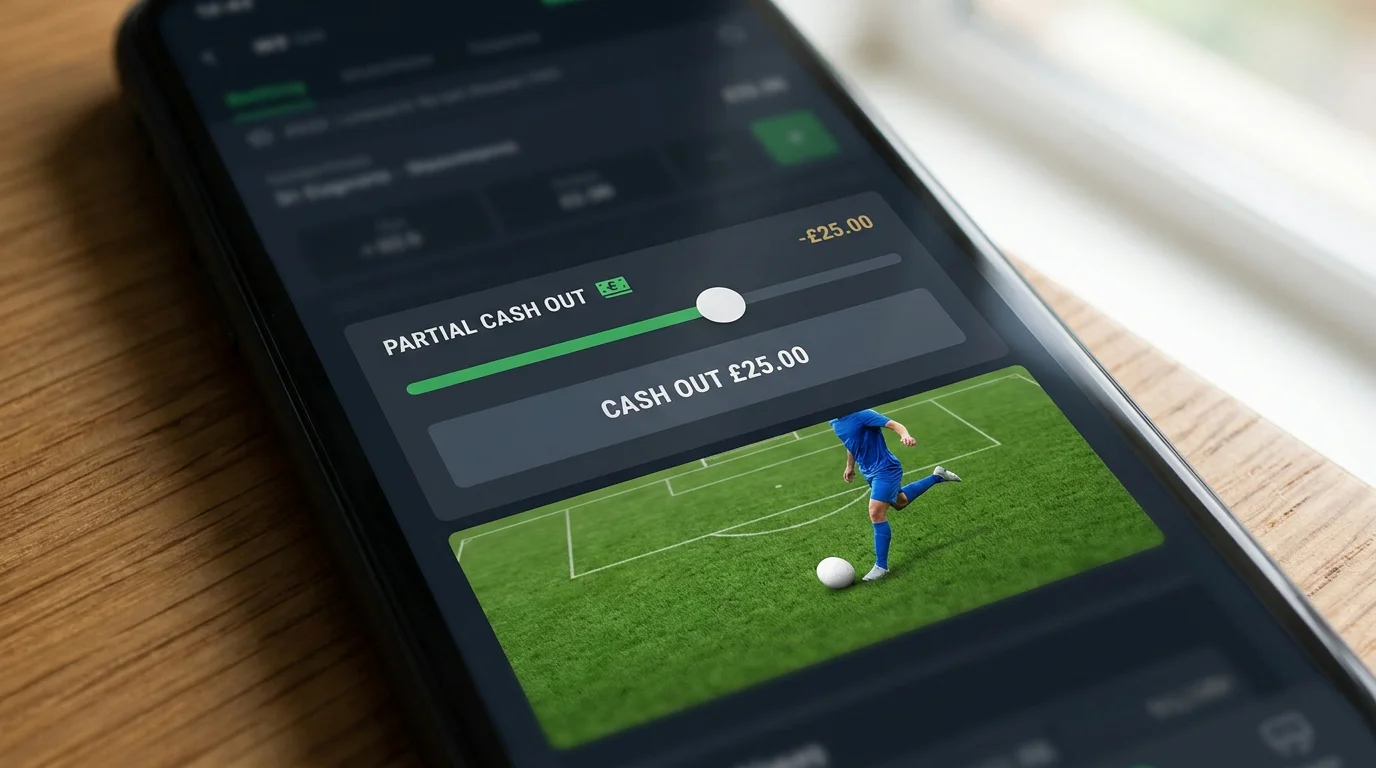
Mobile devices account for 71% of all online bets in the UK, and partial cash out was designed with mobile bettors in mind — people watching matches on the go who want to adjust their exposure without fully closing a position. I use partial cash out in one specific scenario: when my original analysis still holds but an unexpected event (injury, tactical shift) has introduced risk I didn’t price in. Cashing out 40-50% of the bet secures some value while maintaining upside if my original thesis plays out.
Auto cash out is a pre-set trigger. You tell the platform to automatically cash out if the value reaches a specified amount. This removes the emotional decision from the equation, which sounds appealing but introduces a different risk: the auto-trigger might execute at a moment when the match dynamics have shifted in your favour and you’d have been better off holding. I’ve stopped using auto cash out entirely because the timing of the trigger rarely aligns with the moments where early settlement actually makes analytical sense.
When Cashing Out Is the Right Call
I cash out on fewer than 5% of my bets, and every one of those decisions follows the same logic: new information has fundamentally changed the probability of my bet winning, and the cash out price is better than my revised assessment of the fair value.
Concrete example: I’ve backed the home team to win at 2.20, they score to go 1-0 up, but their centre-back picks up an injury in the 55th minute and has to be replaced by a youth player making his debut. My original assessment priced the home win at 50%. With the defensive downgrade, I revise that to 40%. The cash out offer at that point reflects roughly a 60% probability of the bet winning — more generous than my revised view. Cashing out here is analytically sound. I’m taking a price that exceeds my updated probability.
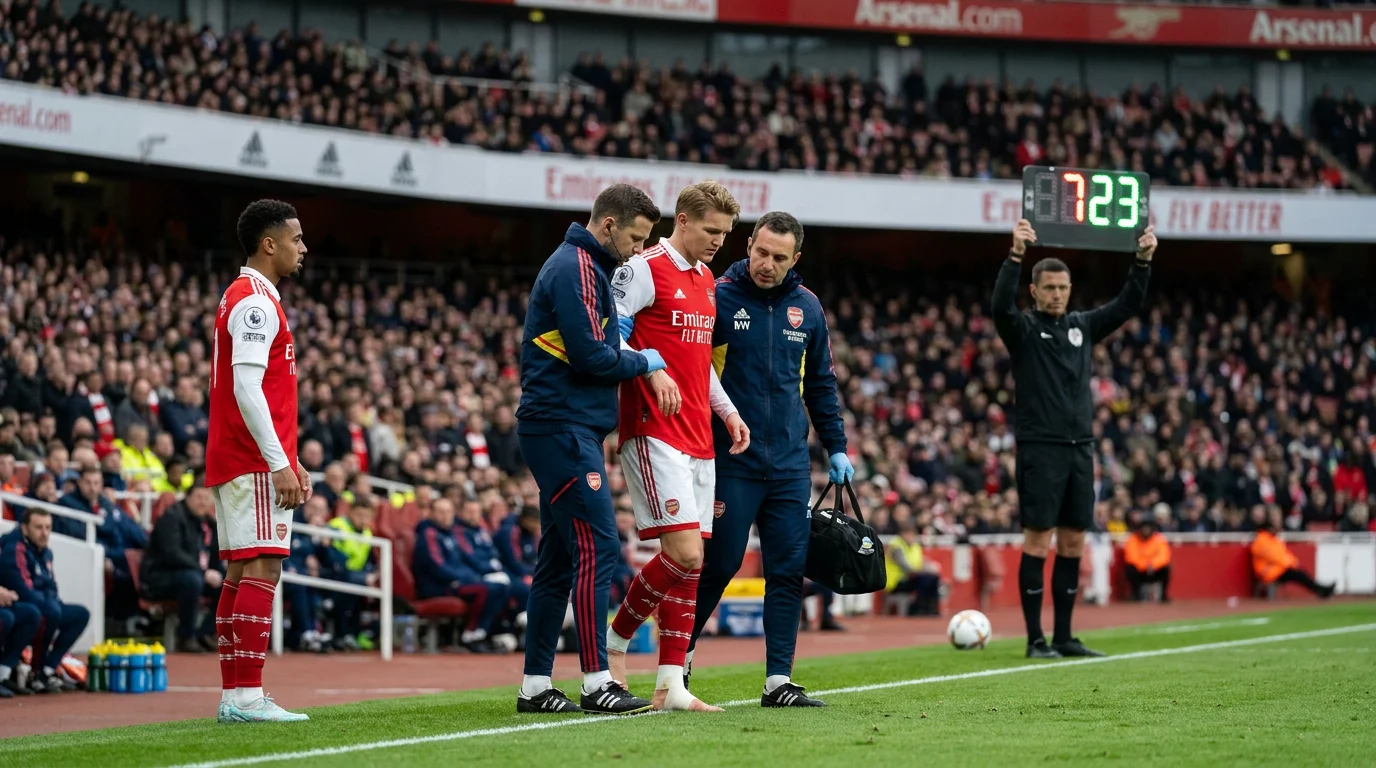
The key distinction is between cashing out because the facts have changed and cashing out because you’re nervous. The first is a legitimate strategic decision. The second is the bookmaker harvesting margin from your anxiety.
The Mathematical Reality of Habitual Cashing Out
If you cash out regularly — say, on 30% of your bets — the cumulative margin you’re paying the bookmaker on those settlements significantly erodes your overall return. I ran the numbers on a twelve-month period where I tracked cash out decisions against outcomes. In bets where I cashed out, my effective margin paid was 5.2% — on top of the original odds margin. In bets where I let the result stand, the margin was whatever was priced into the opening odds.
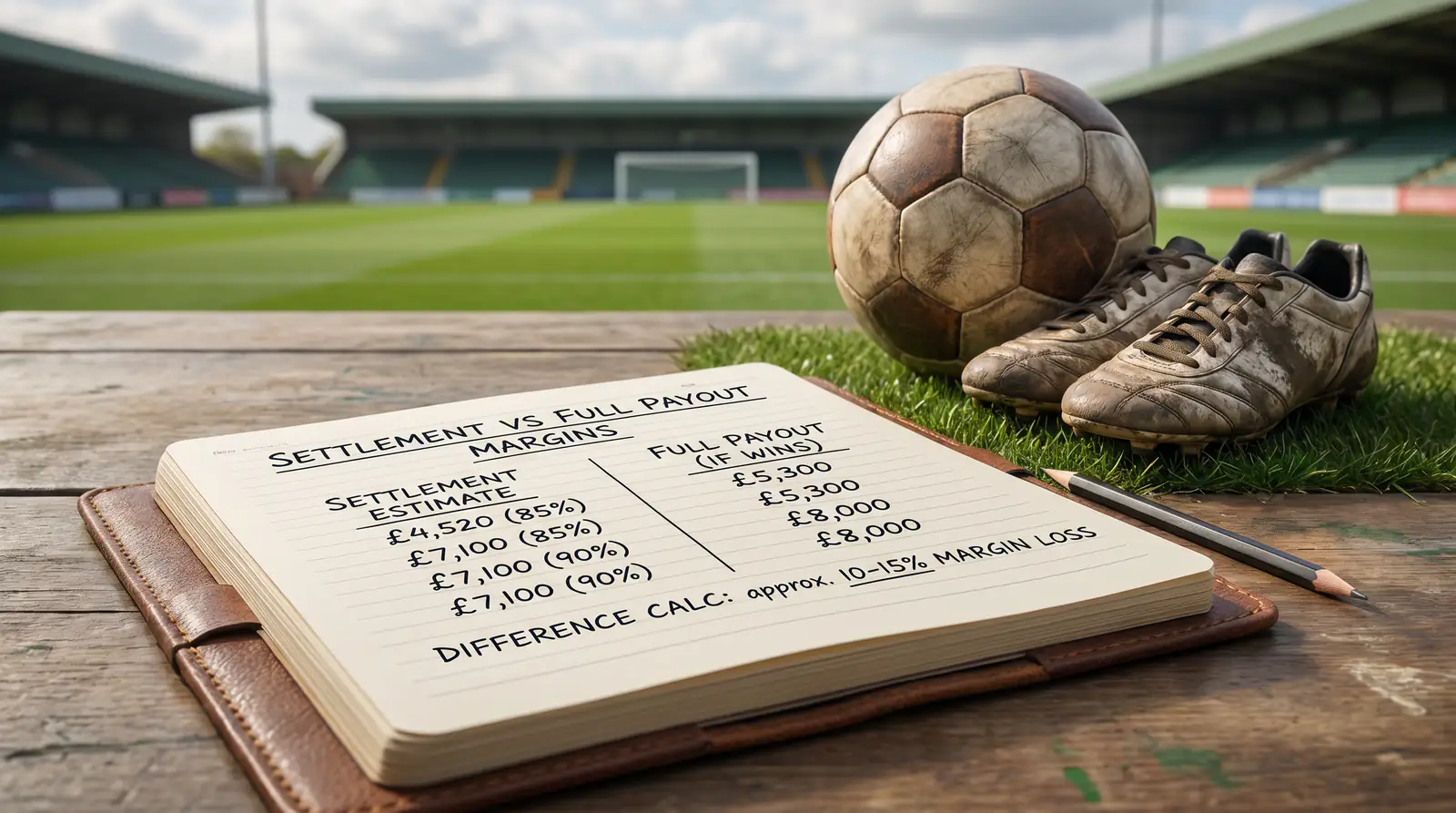
Habitual cashing out is functionally equivalent to paying a higher overround on every bet you place. The bookmaker’s promotion of cash out as a “feature” obscures this reality, because the psychological comfort of securing a profit feels like a benefit even when the mathematics say otherwise.
The disciplined approach is to treat cash out as an emergency tool, not a standard feature. Define your cash out criteria before kick-off — what specific events would cause you to revise your probability assessment? — and ignore the flashing cash out button unless one of those events occurs. For a deeper look at when live settlement intersects with broader in-match decision-making, in-play betting football covers the mechanics of how live odds and cash out values interact.
Articles
Created by the "leaguebettips.com" editorial team.
