


I lost count of the times I backed an away win in the Championship at 3.50, watched the team dominate for 70 minutes, and then saw a late equaliser steal a 1-1 draw. The bet was dead because a draw is a loss in the match result market. When I shifted a portion of those away-win bets to draw no bet, the impact on my bankroll wasn’t dramatic in any single month — but over a full season, the variance reduction was transformational.
Draw no bet strips the three-way match result market down to two outcomes. You back either the home side or the away side. If your selection wins, the bet pays out at reduced odds compared to the standard match result. If the match ends in a draw, your stake is returned. The draw — which occurs in roughly 26% of Premier League matches and even more frequently in the lower leagues — is neutralised as a risk factor.
The Mechanics of DNB Pricing
Last season I ran a comparison between standard match result odds and DNB odds across 200 Championship fixtures. The relationship was consistent: DNB prices were approximately 25-35% shorter than the equivalent match result odds for the same selection. A home win priced at 2.20 on the three-way market translated to roughly 1.55-1.65 on draw no bet. An away win at 3.40 translated to approximately 2.20-2.50 DNB.
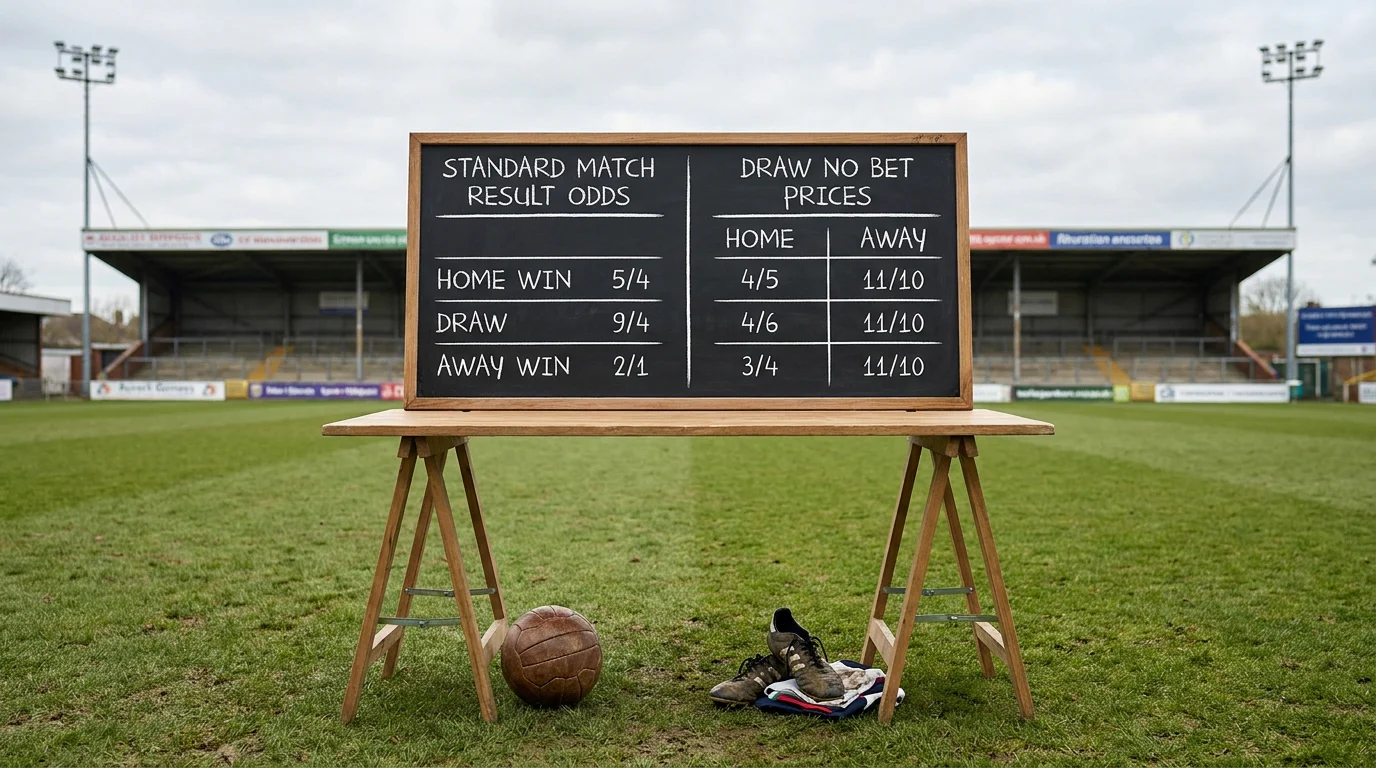
The bookmaker calculates DNB odds by removing the draw probability from the equation and redistributing it proportionally across the two remaining outcomes. In practice, the overround on DNB markets tends to be slightly higher than on three-way match result, because the market is less liquid. That additional margin is the cost of removing draw risk, and for many fixtures, it’s a cost worth paying.
Mobile devices account for 71% of all online bets in the UK, and the quick-tap convenience of mobile betting means many bettors don’t scroll past the standard match result market to find DNB. That lower visibility translates into lower trading volume, which means the DNB price is occasionally less efficient than the three-way market it derives from. I’ve found specific fixtures where the DNB implied probability for an away win is more generous than the same selection’s implied probability within the three-way market after adjusting for the draw — a pricing inconsistency that shouldn’t exist in theory but appears regularly in practice.
When DNB Outperforms Standard Match Result Betting
DNB is not universally better than standard match result. It’s a tool for specific situations, and knowing which situations favour DNB over three-way is the analytical core of using this market effectively.

The primary scenario is away bets in the Championship and lower leagues. Draws are significantly more common in the lower EFL divisions than in the Premier League — League One and League Two draw rates regularly exceed 28% of all matches. For an away selection in these divisions, the probability of a draw wiping out your bet is higher than in the top flight, which means the insurance value of DNB is correspondingly greater. I use DNB for virtually all my League One and League Two away selections because the draw frequency makes standard away wins an unnecessarily volatile proposition.
The second scenario is matches between closely ranked teams where the form is evenly balanced. If my analysis says Team A has a 38% chance of winning and Team B has a 35% chance, with a 27% draw probability, backing either side on the three-way market is essentially a coin flip with a margin. Backing the stronger side on DNB at least guarantees a stake return if the match gravitates towards the most likely single outcome — the draw.
DNB Versus Asian Handicap 0.0
Draw no bet and Asian handicap 0.0 are functionally identical: both return your stake if the match is drawn and pay out if your selection wins. The difference is branding and market placement. Some operators list DNB under “main markets” and Asian handicap 0.0 under “Asian lines,” with slightly different pricing between the two. I always check both listings before placing a bet, because the DNB price and the Asian handicap 0.0 price on the same fixture can differ by 0.05-0.10 in decimal odds — a small but non-trivial margin when you’re placing hundreds of bets across a season.
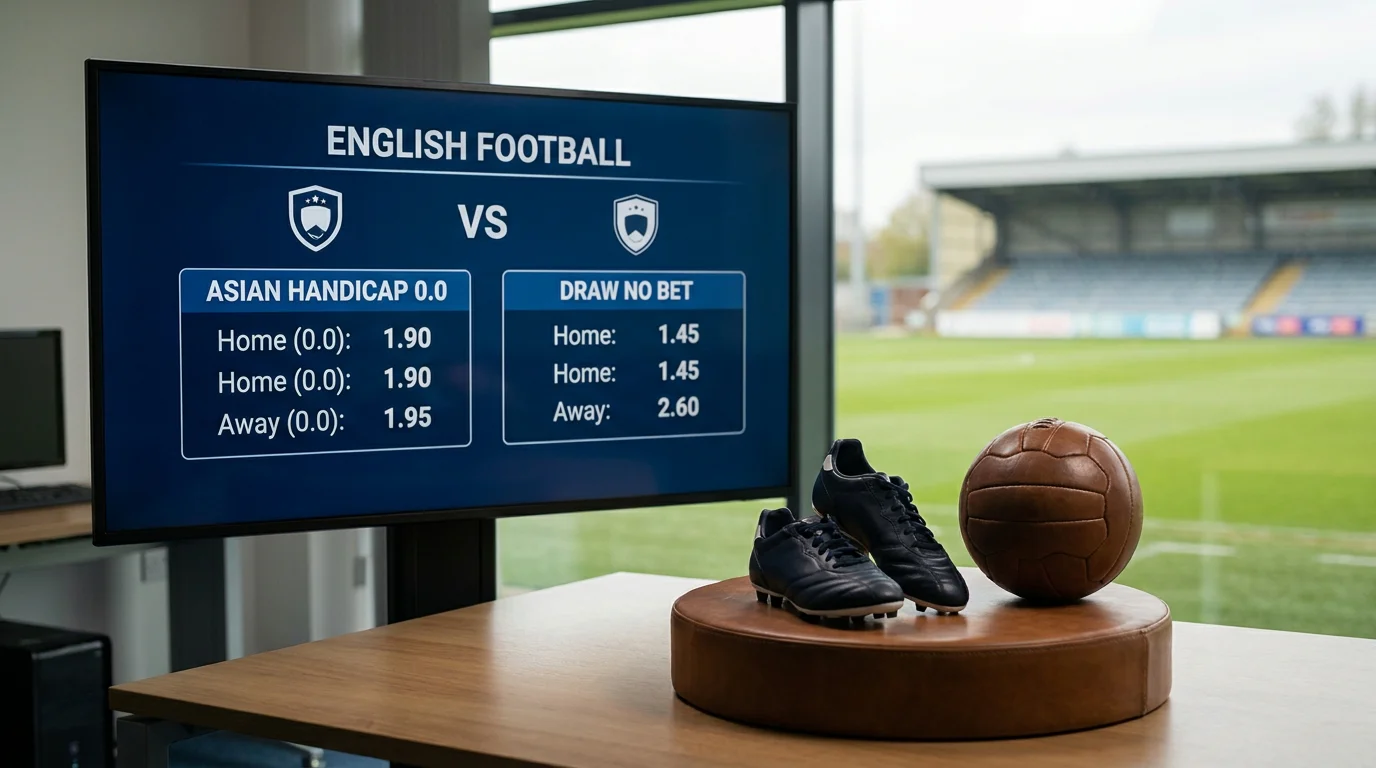
Asian handicap markets generally carry tighter overrounds than standard European-format markets, so the 0.0 line is often marginally better value than the equivalent DNB listing. The difference isn’t large enough to build a strategy around, but it’s large enough to check every time.
Staking and Bankroll Implications of Using DNB
The lower odds on DNB selections mean each winning bet returns less than the equivalent match result bet. To maintain the same overall return profile, you either increase your stake per bet or accept lower individual returns. I take the second approach — accepting lower per-bet returns in exchange for significantly reduced variance across a monthly sample. The UK sports betting market holds 11.1% of global revenue, and within that market, the bettors who sustain long-term profitability are overwhelmingly those who manage variance rather than chasing peak returns.

My flat staking approach applies the same unit to DNB bets as to three-way match result bets. The lower individual returns are offset by the higher win rate (because draws that would have been losses become returned stakes), and the net effect on monthly P&L is a smoother equity curve with fewer deep drawdowns. Over a full season, the compounding effect of that reduced variance is more valuable than the marginal per-bet return I sacrifice by choosing DNB over the standard market.

For a comprehensive overview of every bet type available on English football, including how DNB fits within the broader market landscape, football betting markets covers match result, goals, accumulators and niche markets in detail.
Articles
Created by the "leaguebettips.com" editorial team.
