


When I started betting on football seriously, I treated every market the same way: pick a side, place the bet, hope for the best. It took about six months of tracking results before I realised that the market you choose matters as much as the selection itself. A correct read on a match — knowing that a particular side will dominate possession and territory — can still lose you money if you express it through the wrong market. Back the win at short odds and a late equaliser wipes you out. Back the team corners line instead, and that same dominance prints.
UK bookmakers now list anywhere from 50 to 250 markets on a single Premier League fixture, and even lower-league matches carry 30-80 options depending on the operator. That volume creates both opportunity and confusion. With approximately 290 million online bets placed monthly across UK sportsbooks, the majority of that action still concentrates on a handful of core markets — match result, over/under goals, and accumulators. The rest of the menu gets less attention, less liquidity, and — critically for anyone looking for value — less efficient pricing.
This article walks through every major football betting market available in the UK, from the basics through to niche player props, with a focus on how each market works mechanically, where the bookmaker margin sits, and which situations favour which bet types. I am structuring this the way I wish someone had explained it to me ten years ago: not as a glossary, but as a practical guide to matching your analysis to the right market.
Match Result Markets: Where Most Bets Begin
The 1X2 market — home win, draw, away win — is the oldest and most straightforward way to bet on a football match. It is also the one where bookmakers have the most historical data, the most sophisticated pricing models, and consequently the tightest margins. On a typical Premier League fixture, the combined overround on the 1X2 market sits between 103% and 107%. Move down to League Two, and that overround can exceed 110%, which means you are paying more for less efficient prices.
What most people miss about the match result market is the draw. Across all four professional English divisions, draws account for roughly 25-28% of outcomes, yet the draw is consistently the least-backed selection by recreational bettors. This imbalance means the draw price often carries less of the bookmaker’s margin than the home or away win. I do not bet draws as a system, but I always check whether the draw price represents fair value when my analysis suggests two evenly-matched sides.
Double chance is a derivative of 1X2 that covers two of the three outcomes: home or draw, away or draw, home or away. The trade-off is obvious — you reduce risk but take shorter odds. I use double chance sparingly, mainly in situations where I have a strong directional view (this side will not lose) but the match result price does not compensate for the draw risk. Draw no bet, which refunds your stake if the match ends level, achieves something similar but with a different payoff structure.
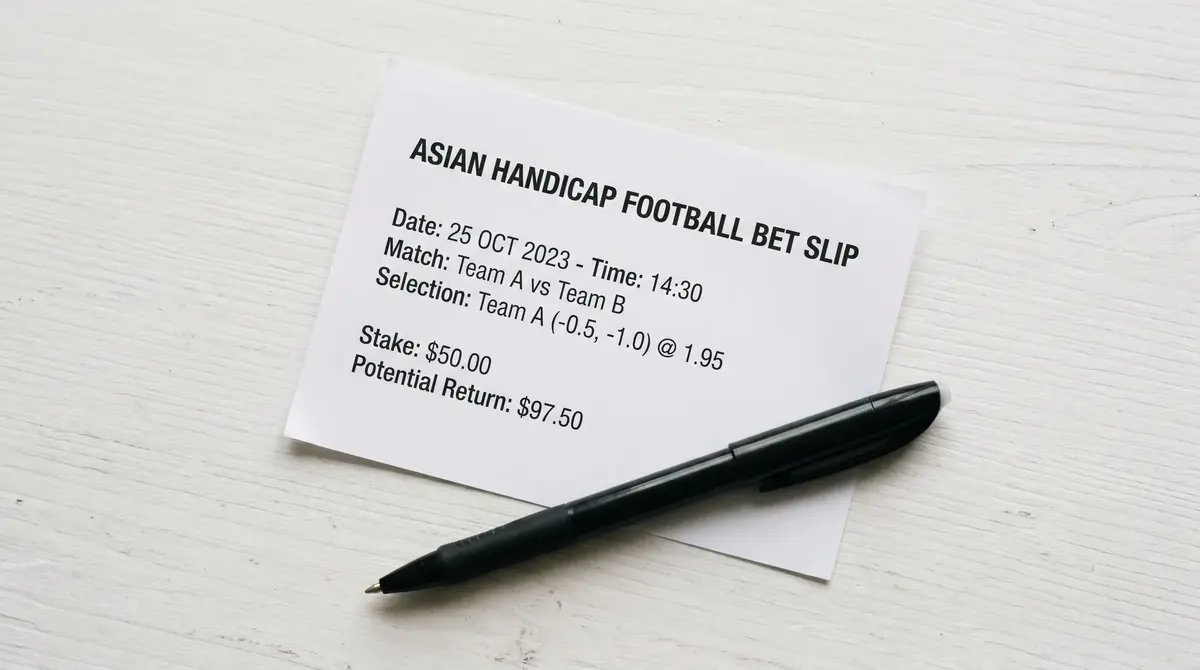
Asian Handicaps take the match result market and add a points spread that eliminates the draw entirely. A team given a -1.0 Asian Handicap needs to win by two or more goals; if they win by exactly one, the stake is refunded. Quarter-goal lines (-0.75, -1.25) split the stake across two adjacent handicaps, creating partial win/loss outcomes. The Asian Handicap market attracts sharper money and moves faster than 1X2, which makes it a better indicator of where the informed market sits on any given fixture. For serious match bettors, this is the market I would recommend understanding first, even if it takes longer to get comfortable with the mechanics.
Goals Markets: Totals, Lines and Thresholds
Goals markets strip away the question of who wins and focus entirely on how many goals are scored. That shift in framing opens up analytical angles that match result betting does not. You do not need to predict the winner — you need to predict the tempo, the style, and the defensive quality of both sides combined. 10% of the UK population participates in online sports betting, and a significant chunk of that action flows into goals markets because they feel simpler to assess than picking a winner.
The most common goals market is the total goals line, typically set at 2.5 for English football. “Over 2.5 goals” means three or more goals in the match; “under 2.5” means two or fewer. The line exists at other thresholds too — 0.5, 1.5, 3.5, 4.5 — and each carries different odds reflecting the probability distribution of goals in a given fixture. Premier League matches have averaged around 2.7 goals per game over recent seasons, which means the 2.5 line is perpetually balanced, and the margins on it are tight.
Where the goals market gets interesting is the intersection of league and line. Lower-division English football tends to produce fewer goals per match, which means the under 2.5 line hits more frequently in League One and League Two than in the Premier League. That structural difference is not always fully reflected in the odds, particularly for matches involving sides playing away from home, where defensive setups and lower squad quality compress the scoreline. I will come back to this in the league-specific section below, but the principle is worth flagging here: the same goals line carries different probabilities depending on which division you are betting on.
BTTS: Both Teams to Score
Both Teams to Score is a binary market: either both sides score at least once, or they do not. The appeal is simplicity — you do not need to care about the final score, just whether each team finds the net. BTTS “yes” has landed in roughly half of Premier League matches over the last few completed seasons, which makes it a near-coin-flip market where the bookmaker’s edge comes entirely from the overround rather than from superior probability assessment.
The analytical approach to BTTS betting centres on defensive records, clean sheet rates, and match context. A side that has failed to keep a clean sheet in their last eight home matches is a strong BTTS “yes” candidate — but only if the opposition has enough attacking quality to exploit that weakness. The mistake I see most often is treating BTTS as a one-sided question: people check whether Team A concedes regularly without checking whether Team B actually scores regularly. Both conditions need to hold.
BTTS variants — BTTS and over 2.5, BTTS and win — combine the base market with an additional condition, which increases the odds but also the overround. These combination markets carry significantly higher margins than the standalone BTTS market, and I tend to avoid them unless the enhanced price genuinely compensates for the added risk. More often than not, the bookmaker’s margin on the combination is worse than the sum of the margins on the individual markets placed separately.
Over/Under Goals
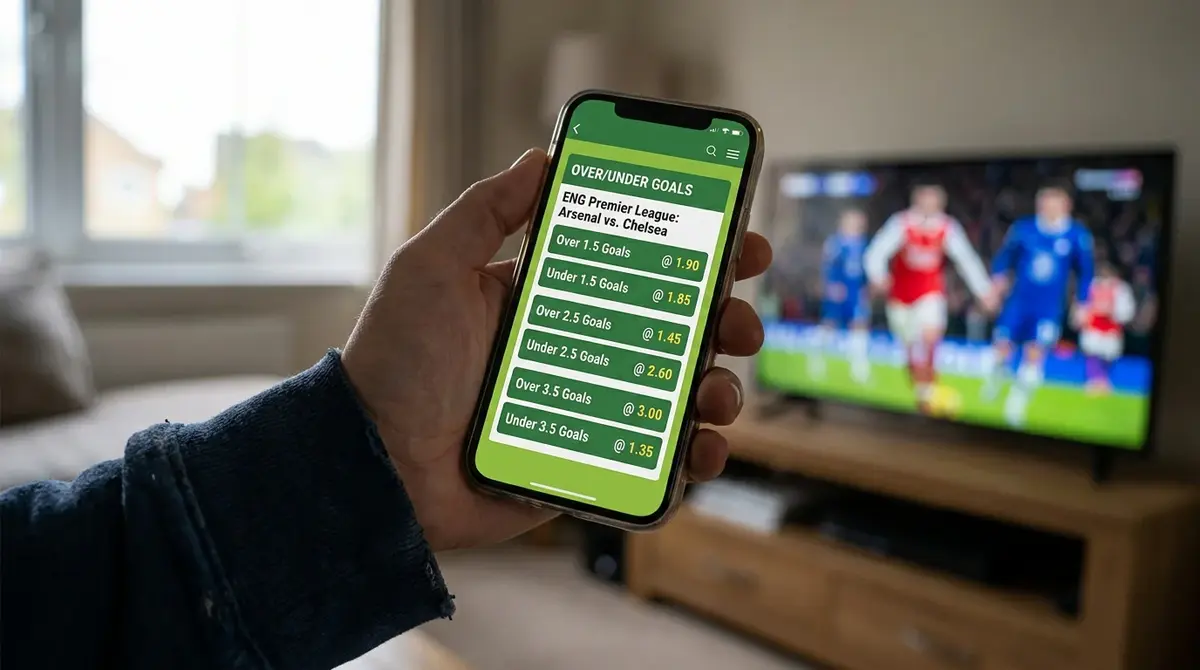
The standard over/under 2.5 goals market is the most liquid goals market on any given fixture, but it is not always the most profitable. I have found better value at the 1.5 and 3.5 thresholds, where the pricing is less tight because less money flows through these lines. Over 1.5 goals — requiring just two goals in the match — wins at a rate above 75% in the Premier League, which means the odds are short but the market is stable enough to anchor accumulator legs. Under 3.5 goals, by contrast, captures a wider range of outcomes and tends to be underpriced in low-profile midweek fixtures where both sides are managing squad rotation.
Asian goal lines work the same way as Asian Handicaps but applied to total goals. A line of 2.25 splits your stake: half on over 2.0 and half on over 2.5. If exactly two goals are scored, you lose half and get half refunded. These quarter-goal lines eliminate some of the dead-heat risk that standard over/under markets carry, and they are available on most major operators for Premier League and Championship fixtures. For League One and below, Asian goal lines are harder to find and carry wider margins when they do appear.
Accumulators: Combining Selections Across Matches
Last January, I tracked every four-fold accumulator placed by a group of recreational bettors I know over a full month. Twenty-three accumulators, not a single winner. The combined strike rate was 0%. That is not an indictment of accumulators as a concept — it is a demonstration of what happens when selections are made independently without accounting for correlation and compounding probability.
An accumulator — or “acca” — combines multiple selections into a single bet where all legs must win for the bet to pay out. The appeal is the multiplied odds: four selections at 2.0 each produce a combined price of 16.0 on a four-fold. The reality is that the bookmaker’s margin compounds alongside the odds. If the overround on each individual selection is 5%, a four-fold carries an effective margin of roughly 21% — and that is before considering any correlation issues between the legs.
The UK betting market has a particular cultural attachment to accumulators. Saturday afternoon accas are practically a national pastime, and operators actively promote them through enhanced odds, acca insurance, and acca boosts. The overall UK gambling market is growing at a projected CAGR of 6.2%, with the betting segment valued at $5.61 billion in 2024, and a meaningful portion of that growth comes from the popularity of accumulator products aimed at recreational bettors.
Does that mean accumulators are always a bad bet? Not necessarily. The key is selection discipline and understanding the margin you are paying. A two-fold or three-fold with well-researched selections carries a manageable margin. A seven-fold built on gut feeling and social-media tips is a donation to the bookmaker. I use accumulators occasionally — usually two or three legs, never more than four — and only when my individual selections already represent value on their own terms. The accumulator format is a delivery mechanism, not a strategy.

Bet Builders: Combining Markets Within a Single Match
Bet builders — also known as same-game multis or “request a bet” depending on the operator — let you combine multiple selections from a single match into one bet. A typical bet builder might combine: match result (home win), over 1.5 goals, and a specific player to have 2+ shots on target. The legs are correlated — a home win and over 1.5 goals are not independent events — and the pricing reflects that correlation, although not always accurately.
The mechanics are straightforward. You select your legs from the available match markets, the bookmaker’s algorithm calculates a combined price accounting for the correlation between selections, and you place a single bet at that price. Not every combination is available — some operators restrict certain pairings, particularly where the correlation is extremely high (combining “over 3.5 goals” with “both teams to score and over 2.5,” for example, which are nearly redundant conditions).
Where bet builders get analytically interesting is in the correlation pricing itself. I have found that some operators underestimate the positive correlation between certain legs — particularly between match result and player performance metrics. If you back a heavy favourite and combine that with their striker having 3+ shots, the positive correlation between those events is high (the favourite having more possession generates more shots for their forwards), and the combined price sometimes does not discount as much as it should. That is where a sharp bettor finds value: not in the headline price, but in the correlation adjustment.
The trap with bet builders is overcomplication. Every additional leg reduces your probability of winning, and the temptation to add “just one more” selection at short odds is powerful. I limit my bet builders to three legs maximum — ideally two — and only use them when I have a specific match thesis that cannot be expressed through a single market. If your bet builder has six legs, you do not have a thesis. You have a lottery ticket with a veneer of analysis.

Player and Niche Markets: Where Specialisation Pays
Player props — shots, tackles, cards, assists, passes completed — represent the fastest-growing segment of football betting markets in the UK. Five years ago, you could bet on who scores. Today, you can bet on whether a specific midfielder will complete 40+ passes or whether a full-back will make 3+ tackles. The granularity is remarkable, and the pricing is often soft because the data infrastructure behind these markets is still catching up to the demand.
Goalscorer markets remain the most popular player-level bet: first goalscorer, anytime goalscorer, last goalscorer, and hat-trick scorer. The margins on these markets are substantial — first goalscorer overrounds regularly exceed 130% — but the volume of recreational money flowing through them creates occasional value on selections that the market underprices. Penalty takers, set-piece specialists, and players deployed in advanced roles for the first time under a new manager are all situations where the market can be slow to adjust.
Cards markets — total bookings, player to be carded, time of first booking — are an underappreciated niche. Referee tendencies are trackable and relatively stable: some officials average 4+ yellow cards per match over a season, others hover around 2.5. Cross-referencing the referee appointment with the disciplinary profiles of the two squads gives you a data-driven basis for cards betting that most recreational bettors simply do not have. Zoë Osmond, CEO of GambleAware, has noted that certain types of gambling lead to “an increased chance of experiencing gambling harm” and that harm can have “a corrosive effect on people’s lives, finances, careers and relationships.” That warning is particularly relevant in high-margin niche markets where the temptation to chase losses is greatest — player props and correct score markets included.

Corners, throw-ins in the attacking third, and offsides are all available as betting markets on major operators for Premier League fixtures. The analytical edge in these markets comes from match-state analysis: teams chasing a goal generate more corners; teams protecting a lead concede more territory. If you have a view on the likely match state — which side will lead at half-time, how the tactical setup will evolve — you can translate that view into a corners or territory bet where the market is less efficient than the headline match result.
Choosing Markets by League: What Works Where
Not every market works equally well across every division, and this is the single most important principle I can pass on about football betting markets. The Premier League, with its deep data coverage and high liquidity, supports the full range of markets from Asian Handicaps to niche player props. The Championship offers a reduced but still substantial menu. By the time you reach League One and League Two, the available markets shrink significantly, and the margins widen on what remains.
In lower-league football, the draw is a much more frequent outcome, and away fixtures in particular tend to produce fewer goals. That statistical reality means the goals markets carry different base probabilities at each level of the pyramid. Backing over 2.5 goals at the same price in the Premier League and in League Two is not the same bet — the underlying probability is meaningfully different, and the bookmaker does not always adjust the price proportionally.
My practical framework is straightforward. For Premier League matches, I focus on Asian Handicaps and specific player props where I have a data edge. For Championship matches, match result and goals markets offer the best combination of liquidity and analytical opportunity. For League One and League Two, I narrow my focus to match result, under/over goals, and BTTS — the markets with enough liquidity to support reasonable stakes and enough inefficiency to reward careful analysis. Anything more exotic at those levels tends to carry margins that no amount of analysis can overcome.
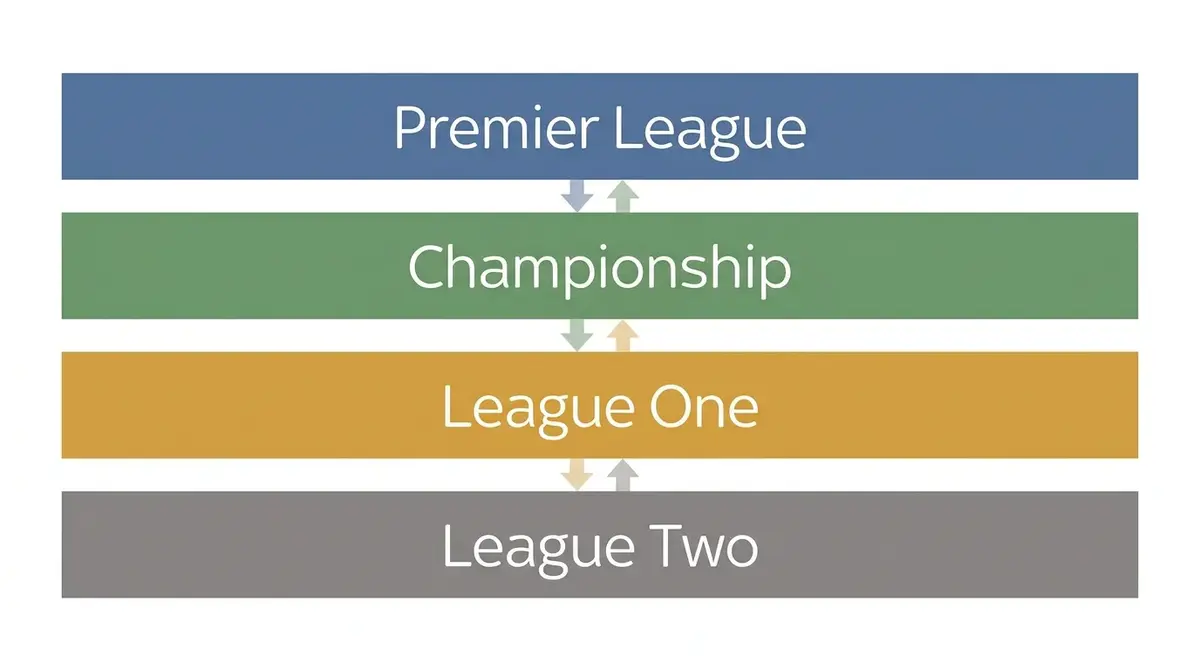
The meta-point is this: the market you choose should reflect both your analysis and the structural conditions of the division you are betting on. There is no point building a sophisticated corners model for League Two matches if the bookmaker only lists a binary over/under line with a 15% overround. Match the market to the league, and you dramatically improve your chances of finding genuine value.
Matching the Market to Your Analysis
The questions I get asked most about football betting markets tend to cluster around mechanics and practicalities. Here are the ones that come up repeatedly.
Articles
Created by the "leaguebettips.com" editorial team.
