


I placed my first Premier League bet in 2014 — a tenner on a 2-1 home win that landed more by luck than judgement. A decade later, I can tell you the luck ran out fast, and what replaced it was a spreadsheet, three data feeds, and a completely different understanding of what “betting on the Premier League” actually involves. The top flight of English football is not just the most-watched domestic league on the planet — it is the single biggest driver of sports betting revenue in the United Kingdom, generating approximately £1.1 billion in gross gambling yield annually. That figure makes football the most popular sport for UK bettors, attracting around 5.8% of the entire adult population.
Those numbers matter because they shape everything: the depth of markets bookmakers offer, the speed at which odds move, and the sheer volume of data available to anyone willing to dig. Roughly 290 million online bets are placed every month across UK sportsbooks, and a disproportionate share of that action lands on Premier League fixtures. Live football remains the single most popular category of sports betting in the country — 6% of all UK adults place bets on live football matches, a participation rate no other sport comes close to matching.
This article breaks down how Premier League betting actually works in 2026: the markets available, the way odds behave through a season, the commercial forces reshaping the landscape, and where genuine analytical edges still exist. I am writing this as someone who has spent years tracking line movements, comparing closing odds, and building models for English top-flight matches — not as someone selling picks or promoting a bookmaker. If you are here for data-backed insight rather than tipster hype, you are in the right place.
Match Betting in the Premier League
Three seasons ago, I tracked every opening and closing 1X2 line across a full Premier League campaign. The pattern that emerged was not subtle: favourites priced below 1.50 (decimal) won roughly 78% of the time, but the margin after the bookmaker overround made flat-staking on those selections a losing strategy. That single finding reshaped how I approach match betting entirely.
The match result market — home win, draw, away win, known as 1X2 — remains the foundation of Premier League betting. It is where most recreational bettors start and where the highest volume of money flows on any given matchday. Bookmakers typically price Premier League 1X2 markets with an overround between 103% and 107%, meaning they build a margin of roughly 3-7% into the combined implied probabilities. Compare that to lower-league matches where the overround can creep above 110%, and you start to see why the top flight attracts sharper money.
What makes Premier League match betting distinct is the depth of information available. Every squad has detailed expected goals (xG) data, pressing metrics, defensive action zones, and set-piece conversion rates tracked by multiple providers. That transparency cuts both ways: it means the odds are generally more efficient — harder to beat — but it also means the bookmaker’s model is not operating in a vacuum. When you identify a factor the market has not fully priced in — a key defensive midfielder returning from injury, a shift in tactical setup after an international break, a managerial change that historically produces a bounce — you have a window before the line adjusts.
Match betting on the Premier League also benefits from liquidity. Because so much money flows through these markets, the odds tend to be tighter than on any other English division. A bettor comparing the same fixture across five or six licensed operators will find meaningful differences in price — sometimes 0.10 or more in decimal terms on the draw, which translates directly into better value when you identify a selection you believe is mispriced. That habit of line shopping, tedious as it sounds, has been the single most consistent source of small edges I have found over a decade of doing this.
One thing worth noting: the Premier League’s schedule density — midweek rounds, FA Cup replays, European commitments — creates fatigue-driven variance that the market sometimes underestimates. I have found that the second fixture in a midweek-weekend double is where models built on full-rest data tend to drift furthest from reality. If you are only betting one or two matches per round, that is where I would focus attention.
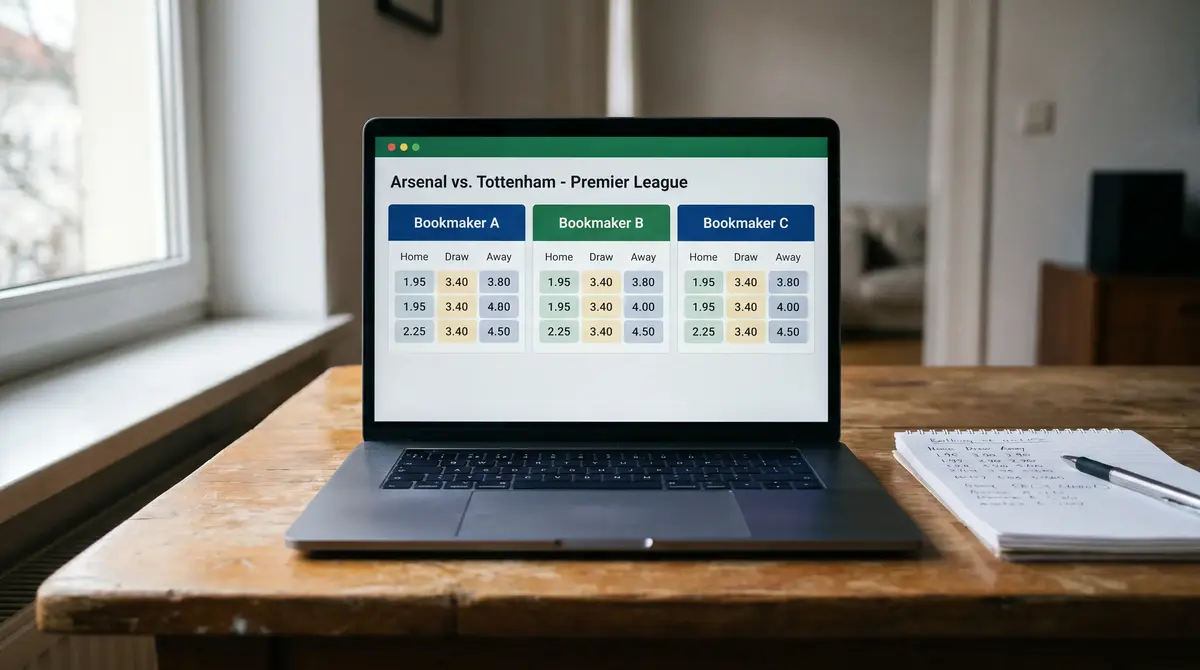
Premier League Match Markets Beyond 1X2
Beyond 1X2, Premier League match cards on major bookmakers typically list 150-250 individual markets per fixture. That number drops dramatically when you move down the pyramid, which is one reason specialist bettors gravitate toward top-flight games. The core match markets include:
Both Teams to Score (BTTS) — a binary yes/no market that strips out the question of who wins and focuses purely on whether each side finds the net. In the Premier League, BTTS “yes” has landed in roughly 50-55% of matches over recent seasons, making it a coin-flip proposition that bookmakers tend to price tightly. The analytical edge here comes from identifying specific matchups where defensive personnel changes or tactical setups push the true probability away from the generic league average.
Over/Under goals — most commonly set at the 2.5 line, meaning you bet on whether three or more goals will be scored. Premier League matches have averaged between 2.65 and 2.85 goals per game over the last five seasons, which keeps the 2.5 line perpetually interesting. I find better opportunities on the 1.5 and 3.5 lines, where the market is thinner and mispricings are slightly more common.
Asian Handicaps deserve specific mention because they eliminate the draw as an outcome and offer quarter-goal increments that reduce dead-heat risk. For anyone serious about Premier League match betting, Asian Handicaps are where the sharpest money tends to settle. The lines move faster, the margins are thinner, and the closing line is a more reliable indicator of true probability than the standard 1X2 market.
Correct score, half-time/full-time, and goalscorer markets round out the match card. These carry higher margins — sometimes 15-20% overround on correct score — but they are also the markets where recreational bettors concentrate their action, which can occasionally create value for those approaching them analytically rather than emotionally.
Outright Markets: Season-Long Betting
Every summer, before a ball is kicked, I pull up the outright markets and compare the pre-season title odds against what the same bookmakers were offering at Christmas the previous season. The drift is always dramatic. A side priced at 8/1 in July can be trading at 40/1 by October if results go sideways, or tighten to 5/4 if they string together a run. That volatility is the entire appeal of outright betting — and its biggest trap.
The main outright markets for the Premier League include: title winner, top-four finish, relegation, top goalscorer, and manager to be sacked first. Of these, the title winner market attracts the most attention and the highest volume, but it is also the most efficiently priced. The commercial relationship between gambling operators and Premier League clubs — shifting significantly from 2026/27 onward — has made outright markets even more prominent, as operators use fixture visibility to drive engagement with season-long products.
Where I have found genuine long-term value in outright betting is in the margins — top-four and relegation markets rather than the title winner. The reason is straightforward: title races tend to involve two or three sides with deeply analysed squads, and the market is sharp. But the battle for fourth place, or the scrap to avoid the bottom three, involves clubs with less public data coverage and more volatile form patterns. A solid analytical framework for Premier League winner odds can also be adapted to these peripheral outright markets, where the bookmaker’s model is built on slightly thinner data.
Timing matters enormously in outrights. Pre-season prices reflect a combination of transfer window activity, public sentiment, and general vibes. By the October international break, the market has roughly 8-10 data points per club, and the prices start reflecting actual performance. My own approach is to place outright positions in two tranches: a small pre-season stake on clubs I think the market underestimates, and a larger position once the early-season data confirms or denies the thesis. Splitting the capital that way avoids the all-or-nothing risk of pre-season punting while still capturing the longer odds available before the season settles.
Each-way outright bets add another dimension. Most bookmakers pay out at 1/4 or 1/5 odds for a top-two or top-four finish, depending on the market. For a club priced at 20/1 to win the league, an each-way bet gives you a realistic shot at a return if they finish in the qualifying places even without winning the title. I use each-way selectively — only when the place terms offer a positive expected value in their own right, not as a consolation prize for a losing title bet.

How Premier League Odds Move Through a Season
I once watched a Premier League match-result line shift by 0.35 in decimal odds within ninety minutes of a team-news announcement. No injury, no suspension — just a tactical tweak that the sharps identified as significant before the recreational market caught up. That kind of movement is not an anomaly in Premier League betting. It is the norm, and understanding why it happens is half the battle.
Odds movement in the Premier League follows a broadly predictable rhythm. Opening lines — typically posted 48-72 hours before kickoff for weekend fixtures — reflect the bookmaker’s initial model output plus an anticipated liability position. These openers attract the first wave of sharp money: syndicates and professional bettors who have their own models and act quickly on any perceived discrepancy. The line then adjusts, sometimes significantly, in response to that early action.
The second major movement window is team-news time, usually an hour before kickoff. Premier League managers are required to submit their starting eleven to the league before the match, but the information leaks at different speeds depending on the club. Some sides have notoriously tight ships; others are porous. The market’s reaction to confirmed team news can be sharp — a key striker on the bench, a defensive reshuffle, or an unexpected formation change will all trigger rapid repricing across 1X2, goals, and Asian Handicap markets.
Flutter Entertainment, the parent company of several major UK-facing brands, reported $1.7 billion in sports betting revenue from the UK and Ireland in 2024 alone. That level of turnover means even small inefficiencies in the pricing process attract sophisticated action. For a retail bettor, the practical takeaway is this: if you are placing bets at opening prices without a clear analytical reason, you are likely on the wrong side of early-market dynamics. Conversely, if you can identify situations where the closing line has moved toward your position, that is a strong signal you found genuine value — even if the individual bet loses.
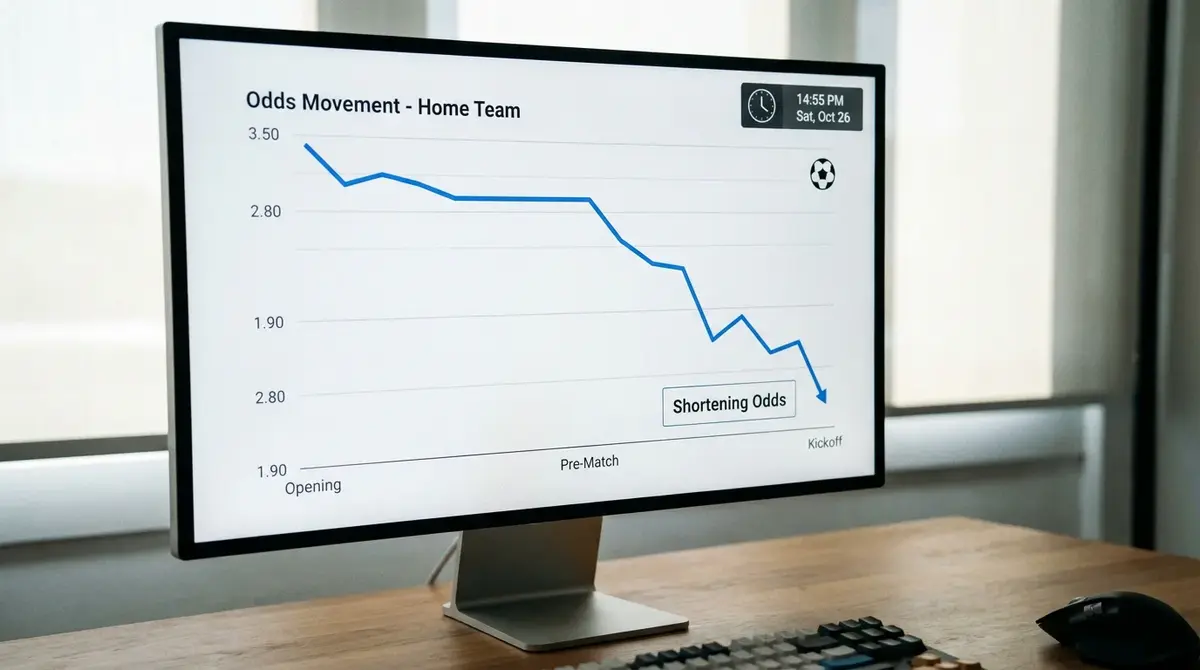
Seasonal outright odds follow a longer arc. Pre-season title markets are notoriously noisy — they reflect narrative and expectation more than evidence. By Christmas, the prices have compressed dramatically around the leading two or three contenders, and value shifts to the “without” markets (betting on who will finish highest excluding the favourite). I track a simple metric: the ratio of a club’s pre-season title odds to their Christmas odds. Any side where that ratio exceeds 3:1 in either direction represents a major market recalibration, and those recalibrations often overshoot, creating late-season value on the correction.
The Commercial Landscape Around Premier League Betting
The relationship between gambling operators and Premier League football is undergoing its most significant structural change in two decades. When the Premier League announced that clubs had “collectively agreed to withdraw gambling sponsorship from the front of clubs’ matchday shirts, becoming the first sports league in the UK to take such a measure voluntarily,” it set a hard deadline that is now reshaping the commercial ecosystem around the sport.
In the 2025/26 season, 11 clubs still carried gambling brand logos on the front of their shirts. From the start of the 2026/27 campaign, that drops to zero for front-of-shirt placements. The financial implications are real: estimates suggest up to 9 clubs had not secured replacement sponsors at the time the ban was confirmed, with potential revenue losses across the league reaching £80 million. For bettors, this matters because operator marketing budgets will redirect — likely toward digital channels, in-app promotions, and content partnerships that make the betting experience feel more embedded in the matchday ritual rather than plastered across a jersey.
Joe Williams, co-founder of sports agency WH Sports, described it as “the biggest shake-up in the front-shirt market in the Premier League for 20 years” and noted that the mood among clubs was a mixture of excitement and trepidation. What I find telling is the operator response. Gambling brands are not retreating from football — they are repositioning. Sleeve sponsorship, LED perimeter boards, training-kit deals, and stadium naming rights remain available. The visibility changes form, not volume.
From an analytical standpoint, the sponsorship ban has a second-order effect worth tracking. Operators who lose front-of-shirt visibility may shift spending toward customer retention — better odds, enhanced promotions, improved in-play products — rather than acquisition. For bettors, that competitive pressure could translate into slightly tighter margins and more aggressive promotional offers in the short term. Whether that holds beyond the first season of the new regime is an open question, but the direction of travel favours the consumer.
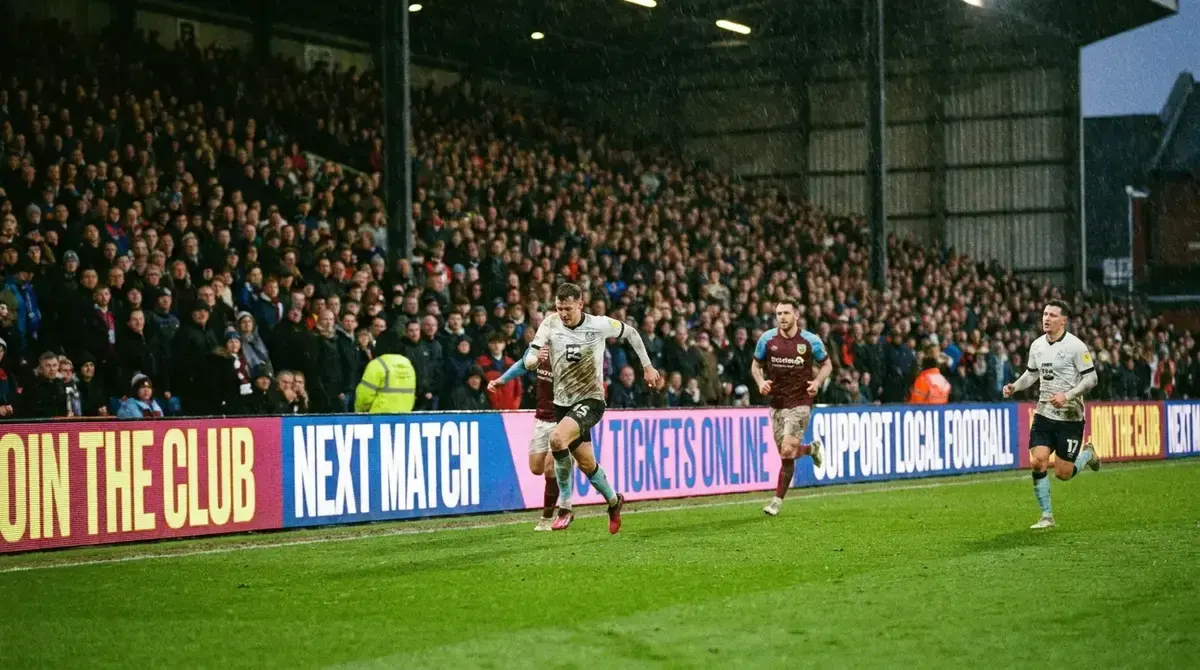
The broader commercial landscape also includes media rights, which drive fixture scheduling and, by extension, betting patterns. The Premier League’s broadcast deal ensures that virtually every match is televised somewhere, which supports in-play betting markets and boosts liquidity on even the less glamorous Saturday afternoon fixtures. That universal coverage is a structural advantage the Premier League holds over every other English division — and it directly benefits anyone who bets on top-flight football.
Where the Data Edge Lives in Premier League Betting
A friend of mine — semi-professional bettor, sharp as they come — once told me that the Premier League is “the hardest league to beat and the easiest league to analyse.” That contradiction sits at the heart of data-driven Premier League betting. The information is abundant. The challenge is doing something with it that the market has not already priced in.
Start with expected goals. Every Premier League match generates xG data from at least three major providers, and the numbers are publicly available within minutes of the final whistle. That means the basic xG narrative — “they created enough chances to win” or “they were fortunate to keep a clean sheet” — is fully absorbed into the next set of odds. To find an edge, you need to go a layer deeper: shot quality distribution (are they generating one big chance or ten low-xG efforts?), progressive passing sequences that lead to entries into the final third, or defensive transitions measured by PPDA (passes allowed per defensive action). These metrics are less widely tracked by recreational bettors and take longer to filter into the odds.
Live football being the most popular betting category in the country means the in-play data environment is particularly rich. Real-time xG, territory metrics, and momentum indicators are now available through several platforms, and the bettors who process that data fastest have a genuine edge during matches. I am not suggesting you need a Bloomberg terminal and a fibre-optic connection, but having a systematic framework for interpreting live data — rather than reacting to what the TV commentator says — separates profitable in-play bettors from the crowd.
Where I see the biggest untapped analytical opportunity in Premier League betting right now is in set-piece data. Corners, free kicks, and throw-ins in dangerous areas account for a significant chunk of goals, but the market still tends to price these events as noise rather than signal. Clubs with dedicated set-piece coaches — and the Premier League now has several who invest heavily in this area — show measurable improvements in both offensive and defensive set-piece efficiency. That improvement takes two to three months to show up in the aggregate statistics, which means there is a window early in the season where the market is still pricing a club’s set-piece threat based on the previous campaign’s data.
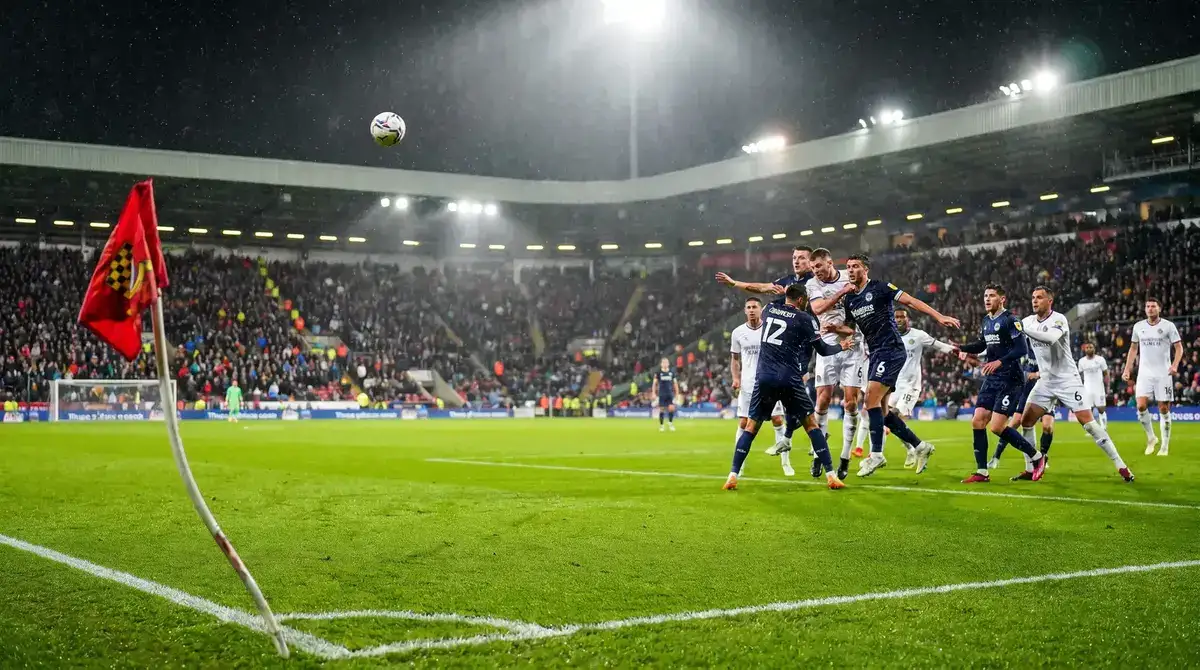
The bottom line is this: Premier League betting rewards patience, specificity, and a willingness to specialise in market niches that the mass of recreational bettors overlooks. If you are trying to beat the 1X2 market on the Saturday lunchtime kick-off, you are competing against some of the sharpest pricing models in the industry. If you are building a database of set-piece conversion rates by club and cross-referencing it against the corners market, you are operating in a space with far less competition.

What the Numbers Tell You Before Kickoff
Every serious question I get about Premier League betting comes back to the same theme: how do you separate signal from noise in the most-watched, most-analysed league in the world? The questions below cover the ground most people are working through.
Articles
Prepared by the leaguebettips.com editorial staff.
