


I backed Leicester at 5000/1 in August 2015. I didn’t, of course — nobody with any sense of probability did. But the story illustrates the fundamental appeal of Premier League outright betting: the market opens wide, the prices compress through the season, and somewhere between the optimistic summer and the decisive spring lies a window where genuine value exists for bettors who understand how title odds move.
Flutter Entertainment’s UK and Ireland sports betting revenue reached $1.7 billion in 2024, and Premier League outright markets are among the highest-volume components of that figure. The title winner market opens before a ball is kicked and stays active until the championship is mathematically decided, making it one of the longest-running betting markets in English football. Understanding its structure and timing is essential for anyone looking to engage with it seriously.
How the Outright Market Is Structured
The Premier League winner market lists all 20 clubs with odds reflecting the bookmaker’s assessment of each team’s probability of finishing first. In a typical season, two or three clubs are priced at single-digit odds (the perceived title contenders), another three or four sit in the 10/1 to 30/1 range (potential challengers), and the remaining clubs are priced from 50/1 to 5000/1.

The overround on this market is significantly higher than on match betting — typically 15-25%, compared to 3-7% on a match result. This reflects the bookmaker’s uncertainty over long-term outcomes and the difficulty of pricing 20 competitors across a 38-game season. The practical consequence is that outright betting requires a larger edge to be profitable, because the margin you’re overcoming on each bet is steeper. In the 2025/26 season, 11 Premier League clubs carried gambling brand sponsorship, a number that will drop sharply when the voluntary front-of-shirt ban takes effect from 2026/27.
How Title Odds Move Through the Season
Pre-season odds reflect expectations built on transfer activity, squad quality, and the previous season’s performance. These opening prices carry the most uncertainty and, consequently, the widest range of plausible outcomes. By November, with roughly a third of the season played, the market begins to solidify. Clubs that opened at 8/1 and sit top of the table compress to 3/1. Clubs that opened at 4/1 and sit sixth drift to 10/1 or beyond.
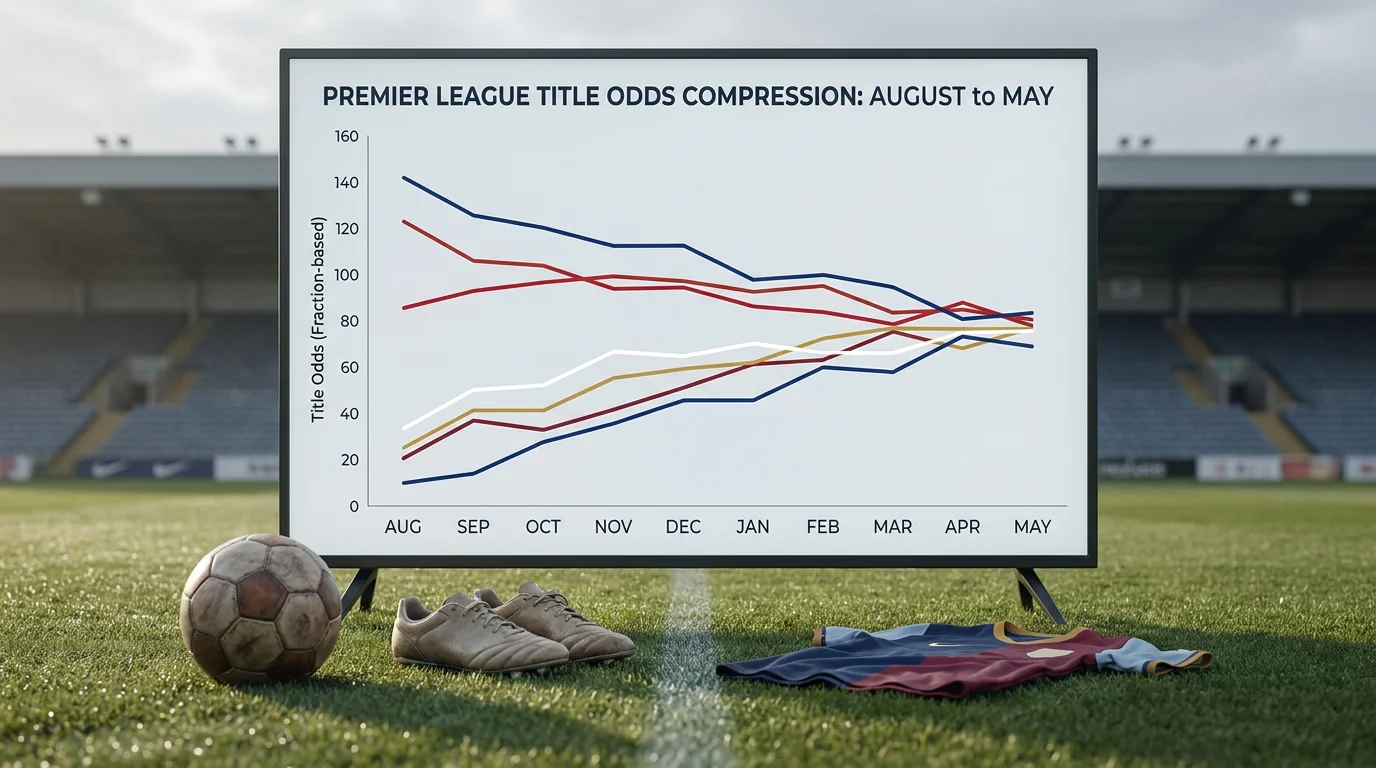
The sharpest odds movement occurs between December and February — the period where fixture congestion, injuries, and squad depth separate the genuine contenders from the pretenders. I’ve tracked title odds across eight seasons, and the average compression from opening to December prices is around 40-50% for the eventual winner. The compression from December to the point of mathematical certainty is another 30-40%. The implication: about half the value in backing the eventual winner is available before Christmas, and the remaining half requires navigating the second-half variance.
When to Place Your Title Bet
The timing question is the most debated aspect of outright betting, and my answer has evolved over the years. I used to favour pre-season bets on the basis that the widest prices offered the most upside. I’ve since shifted to a two-stage approach: a small pre-season bet on my conviction pick (typically 1% of bankroll), followed by a larger position in October or November once early-season form confirms or adjusts my thesis.
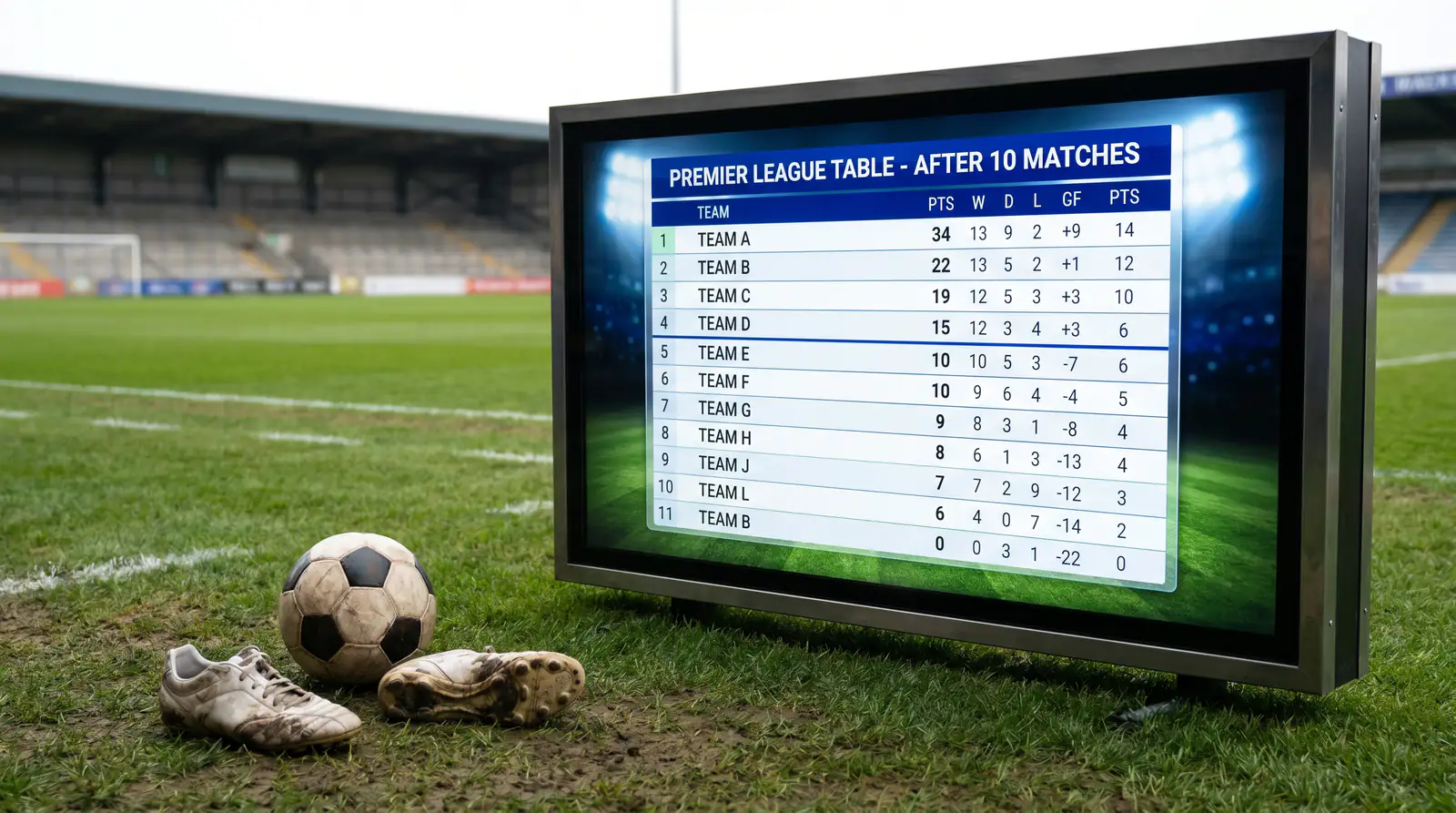
The logic is straightforward. Pre-season prices include a premium for maximum uncertainty, and that premium represents genuine value if your assessment is correct. But the uncertainty is also real — manager sackings, key injuries, and failed transfers can invalidate your thesis within weeks. The October follow-up allows me to deploy more capital once the early-season noise has cleared, even if the odds have shortened. A bet at 5/1 after ten matches of dominant form is often better value than a bet at 8/1 before the season starts, because the probability of the bet winning has increased by more than the odds have shortened.
Each-Way Outright Betting
Each-way bets on the Premier League winner market place two separate wagers: one on your selection to win outright, and one on them to finish in a specified range of places (typically top two or top three, depending on the operator). The place part pays a fraction of the win odds — usually 1/4 or 1/5.

Each-way makes most sense for selections in the 10/1 to 25/1 range — teams good enough to challenge for a top-three finish but priced as outsiders for the title. If a club is priced at 16/1 and the each-way terms are 1/4 odds for a top-three finish, the place portion pays 4/1. This means your combined bet offers a return even if the team finishes second or third, providing a safety net that pure win-only bets don’t offer.
I use each-way outright bets once per season, targeting the club I believe is most underpriced for a top-three finish rather than the team most likely to win the title. These are different assessments: the best value in the win market and the best value in the place market don’t always overlap, and each-way betting rewards the latter.
The “without” market is another angle worth understanding. Some bookmakers offer Premier League winner odds excluding the outright favourite — “Premier League winner without Manchester City,” for instance. This market reprices the remaining 19 teams as if the favourite doesn’t exist, offering a more competitive field and often surfacing value on second-tier contenders that gets buried in the full market. The front-of-shirt gambling sponsorship ban from 2026/27 is reshaping how clubs generate matchday revenue, and the commercial ripple effects will influence squad-building budgets in ways that aren’t yet fully priced into outright markets. Clubs that lose significant sponsorship income may find it harder to retain or recruit quality, subtly shifting the competitive landscape in favour of those with more diversified commercial portfolios.
For a related outright market that operates at the other end of the table, top scorer betting offers a season-long analytical challenge with its own set of timing and value dynamics.
Articles
Prepared by the leaguebettips.com editorial staff.
