

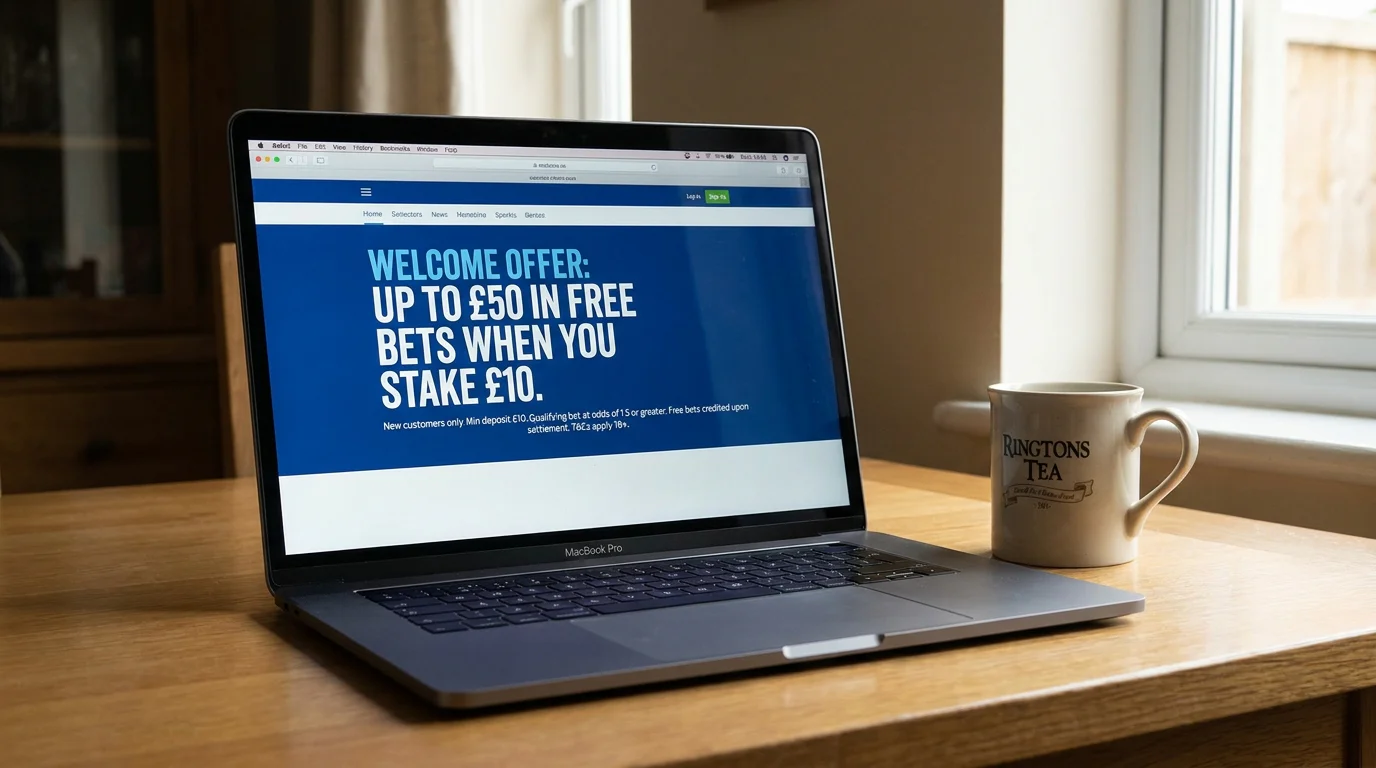
I signed up for my first bookmaker account at 18, drawn in by a “£50 free bet — no strings attached” banner. The strings, it turned out, were extensive. Wagering requirements, minimum odds conditions, time limits, and a maximum withdrawal cap that meant the £50 headline number was worth roughly £12 in realistic terms. That lesson cost me nothing financially but taught me everything about how free bet offers actually function.
Free bets and welcome bonuses are the primary customer acquisition tools for UK bookmakers. With 17.4 million UK adults betting online — roughly one in three — the competition for new accounts is fierce, and the headline numbers on welcome offers reflect that intensity. The gap between what the offer promises and what it delivers is where most bettors lose before they’ve even started analysing a match.
Types of Free Bets in the UK Market
The most common format is the “bet and get” offer: deposit £10, place a qualifying bet at minimum odds of 1.50 or 2.00, and receive a free bet token of equivalent value. The free bet token typically returns only the profit — not the stake — so a £10 free bet at odds of 3.00 returns £20 profit if it wins, compared to £30 total return on a cash bet at the same price. That distinction alone reduces the theoretical value of a free bet by roughly 33% compared to its face value.

No-deposit free bets — offered without any initial spending requirement — have largely disappeared from the UK market. Regulatory pressure and the cost of fraud prevention have made them uneconomical for operators. Where they still exist, the amounts are typically small (£5 or less) and accompanied by restrictive wagering requirements that limit their practical value further.
Enhanced odds promotions are another variant. A bookmaker might offer “Manchester City to win at 30/1” — an inflated price on a heavy favourite, capped at a small stake, with the enhanced portion paid as a free bet rather than cash. These offers look spectacular as headlines. In practice, the maximum stake of £1 or £2 and the free-bet payout structure mean the actual expected uplift is modest.
Wagering Requirements: Where the Value Disappears
Wagering requirements are the mechanism that prevents you from simply withdrawing a free bet as cash. A 3x wagering requirement on a £20 free bet means you must place £60 in qualifying bets before any winnings become withdrawable. A 6x requirement means £120 in qualifying wagers. Online is the largest segment of the UK betting market, accounting for 78.5% of revenue, and the volume of bonuses circulating within that segment is enormous — as are the wagering requirements attached to them.
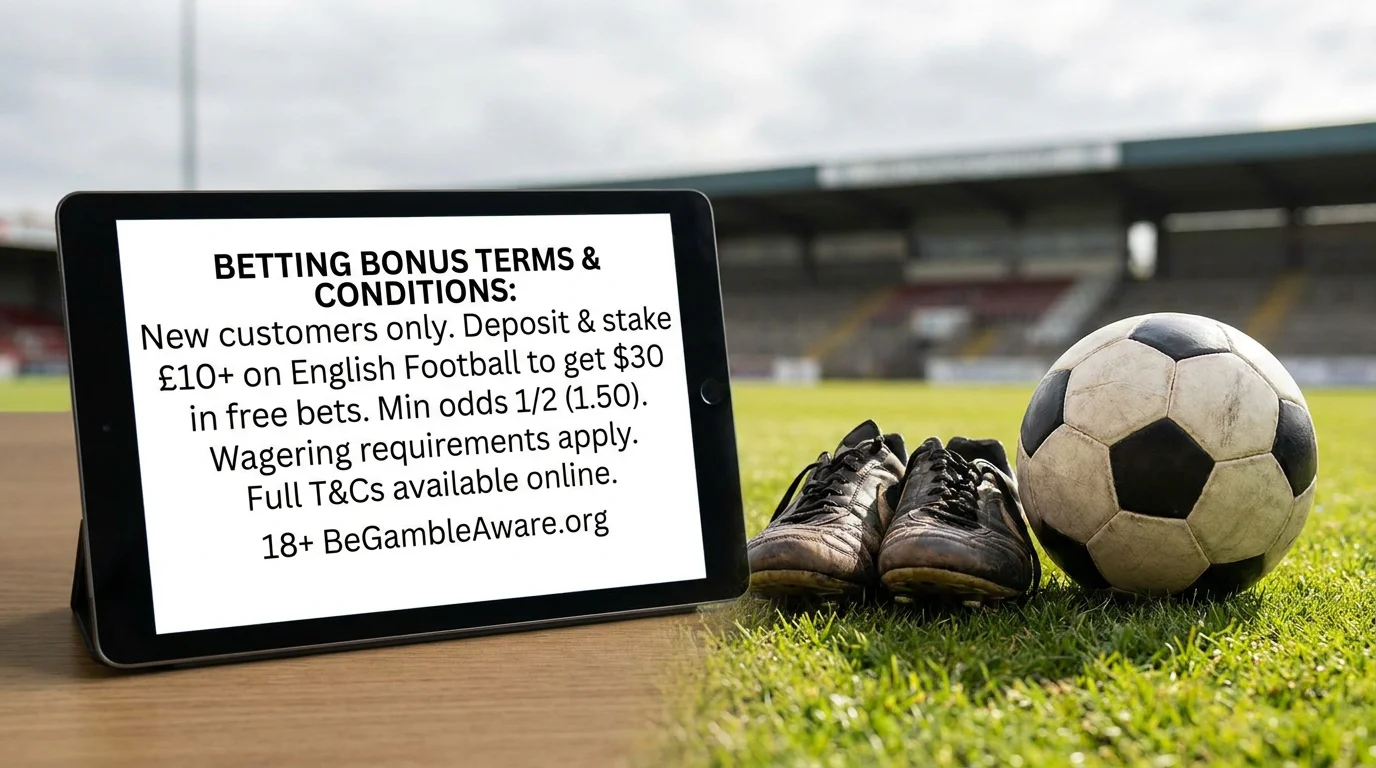
Michael Dugher, who chaired the Betting and Gaming Council, spoke about the industry embracing higher standards in safer gambling. Part of that evolution has included clearer bonus terms, but the fundamental economics haven’t changed: wagering requirements exist because the bookmaker’s margin on each qualifying bet recovers a portion of the free bet cost. At a 5% average margin, a 6x wagering requirement recovers roughly 30% of the bonus value through the margin on your qualifying bets — before you’ve even attempted to withdraw.
The practical impact depends on how you use the free bet. If you’re placing bets you would have placed anyway, the wagering requirement is less damaging because you’re not placing extra bets solely to clear the bonus. If you’re forcing bets to meet the requirement — betting on markets you haven’t analysed or at odds you wouldn’t normally accept — the requirement is actively eroding your bankroll.
What to Check Before Claiming Any Free Bet Offer
Before I claim a welcome offer, I run through a five-point check that takes less than two minutes. First, the wagering requirement multiplier and the time limit for clearing it. Second, the minimum odds on qualifying bets — some offers require bets at 2.00 or higher, which rules out safer value plays. Third, whether the free bet returns stake plus profit or profit only. Fourth, any maximum withdrawal cap on winnings from the free bet. Fifth, which markets are excluded — some offers void free bet winnings on certain bet types or specific leagues.

I’ve seen offers where the terms are so restrictive that the realistic expected value of a £50 “free bet” is under £5. That’s not necessarily a reason to avoid the offer — £5 of free value is still £5 — but it’s a reason to calibrate your expectations and not adjust your betting behaviour to accommodate the bonus.
Free Bets in the Context of Long-Term Value
The smartest approach to free bets is treating them as a small supplement to your existing strategy, not as a reason to open accounts or chase bonuses. If you’re going to sign up with a new bookmaker anyway — perhaps for price comparison or market access — the welcome offer is a genuine perk. If you’re opening an account solely to claim a free bet you wouldn’t otherwise use, the behavioural cost of adapting your betting to the bonus terms often exceeds the free bet’s actual value.
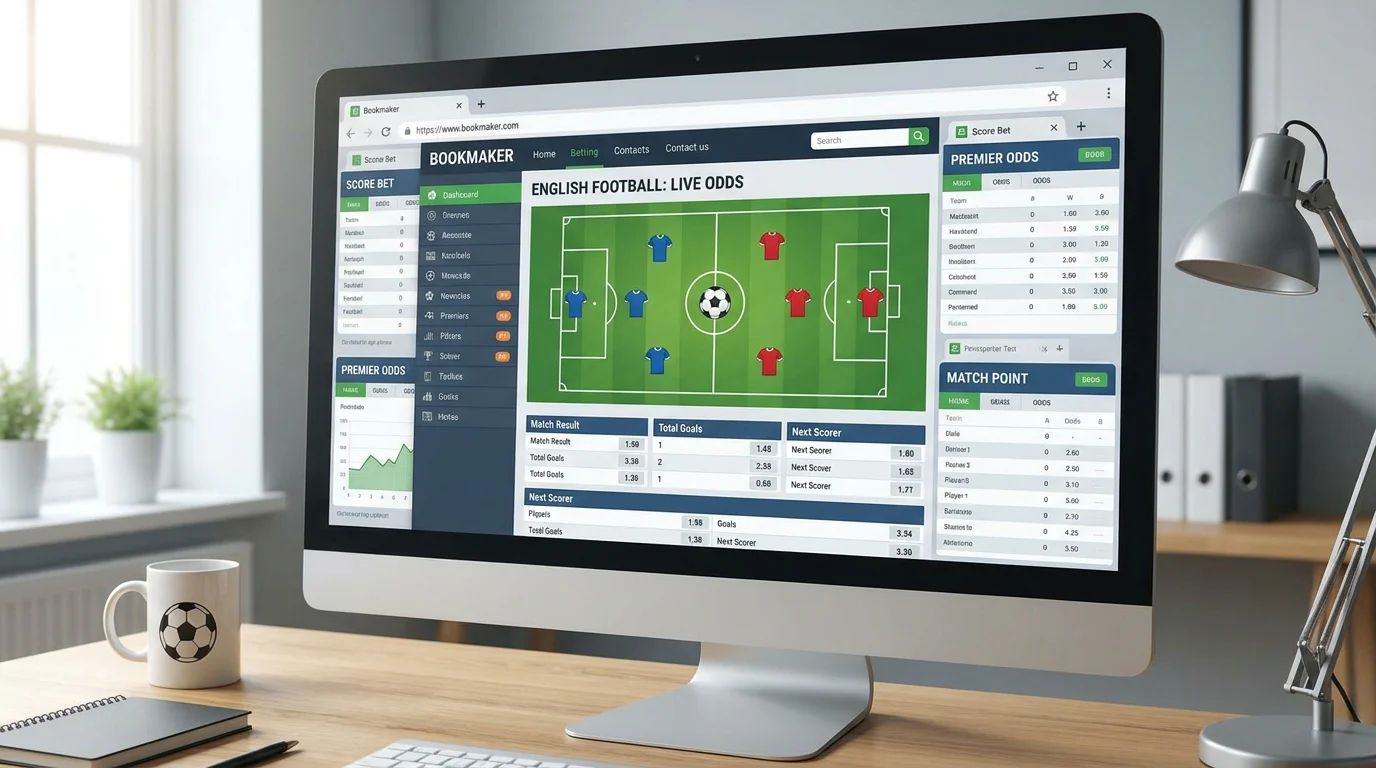
I maintain four bookmaker accounts, and I claimed the welcome bonus on each when I signed up. The combined realistic value of those four offers, after wagering requirements, was approximately £45 — meaningful, but spread across four sign-ups and several weeks of qualifying bets. Since then, I’ve been offered reload bonuses and loyalty promotions sporadically, and I evaluate each one through the same five-point check. Most don’t clear the bar.

Free bets are one piece of a larger puzzle about how to evaluate bookmaker offerings. For a broader look at what else matters beyond bonuses when choosing where to bet, best betting sites UK covers the full range of criteria from licensing to market depth.
Articles
Prepared by the leaguebettips.com editorial staff.
